
Industrial Filter Bag Sewing Machine Short-Arm Two-Needle Cylinder-Bed | KABORY
High-precision filter bag sewing machine with a short-arm, two-needle design, delivering strong, uniform seams, smooth material feeding, and stable performance on thick, multi-layer technical felts up to 3.5 mm.
Description
Short-Arm Two-Needle Cylinder-Bed Filter Bag Sewing Machine | KABORY
Industrial Filter Bag Sewing Machine for Cuffs, Bottoms, and Reinforcement Layers
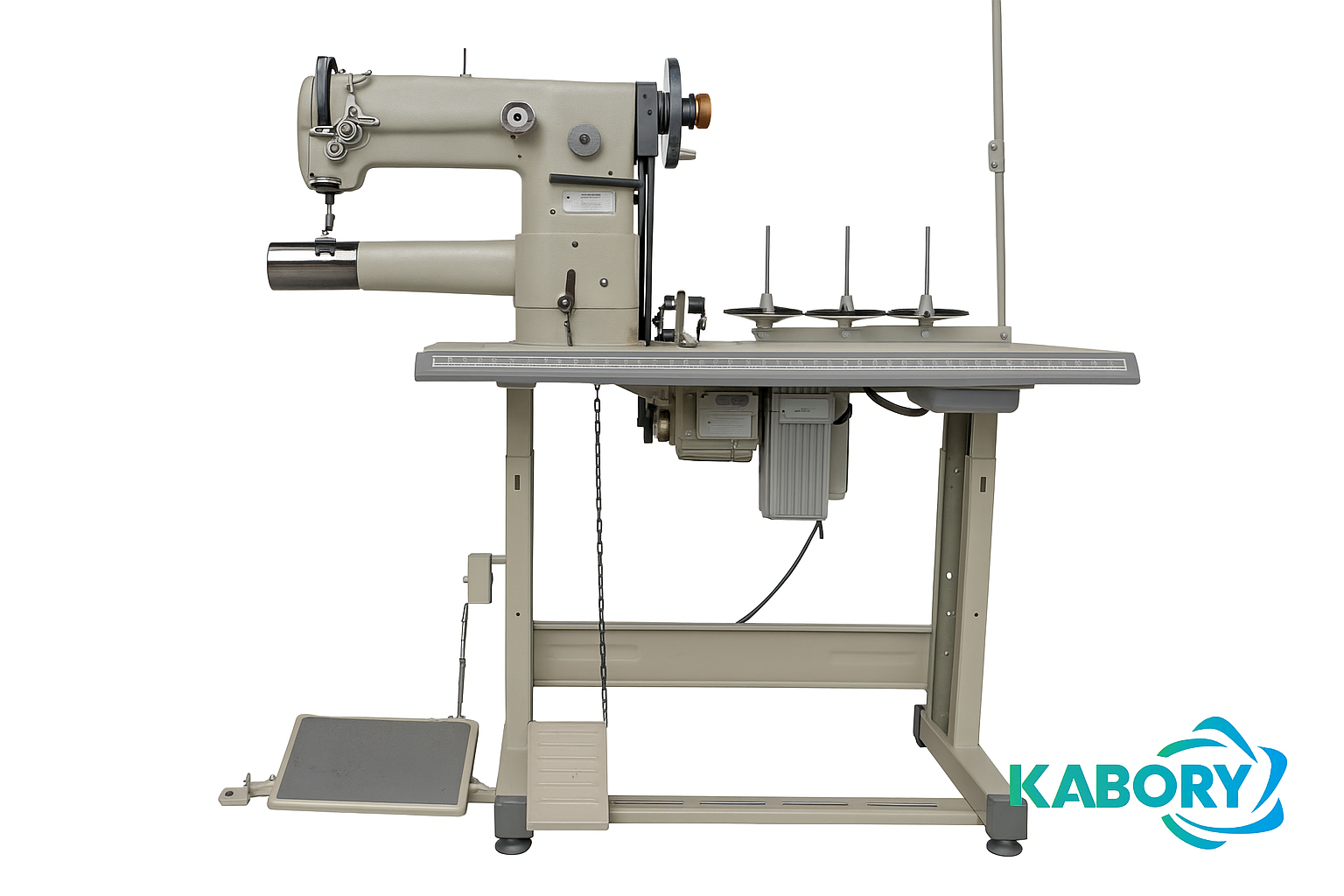
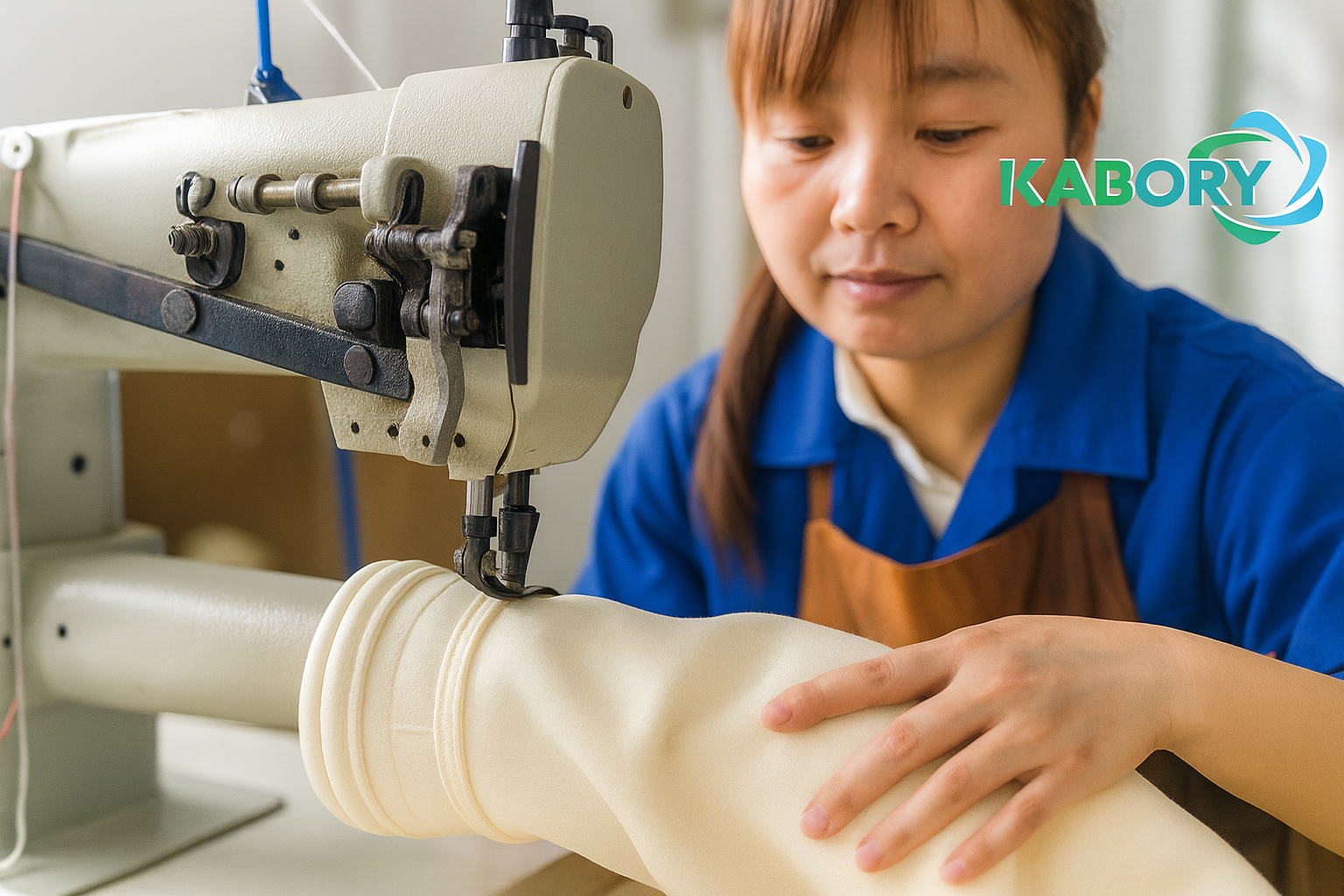
KABORY’s short-arm, two-needle cylinder-bed sewing machine is a heavy-duty system developed specifically for continuous industrial filter bag production.
It is designed for stable, repeatable sewing of cuffs, bottoms, and double- or multi-layer reinforcement sections under real factory operating conditions.
Unlike many machines marketed as filter bag sewing machines—which are often adapted from light-duty, civil-grade double-needle sewing platforms—KABORY is currently the only manufacturer in China that systematically designs and mass-produces sewing machines dedicated to industrial filter bag applications.
All key structural, drive, and sewing elements are engineered around the actual demands of filter bag manufacturing, rather than short-term demonstrations or low-load textile use.
Proven Performance in Real Production
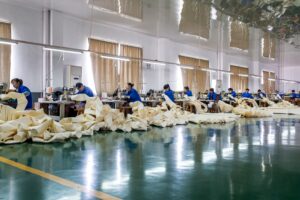
In day-to-day factory operation, this heavy-duty two-needle sewing machine demonstrates clear industrial advantages:
-
Higher sustainable sewing speed without sacrificing seam quality
-
Significantly reduced thread breakage, enabling long, uninterrupted production runs
-
Extremely low skipped-stitch rate, especially at bottoms, double bottoms, and reinforcement layers
-
Stable sewing on thick and multi-layer materials, with consistent stitch length and seam geometry
These results are achieved not through nominal specifications, but through mechanical stability and controlled material handling.
Triple Compound Feed — The Foundation of Sewing Stability
A core element behind this performance is the triple compound feed system.
The needle bar, presser feet, and feed dog move in synchronized coordination, keeping the material under controlled and
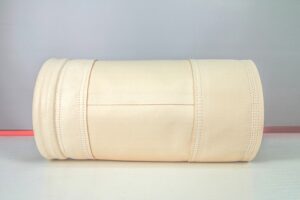
balanced motion throughout the entire sewing cycle.
This feeding method is critical when sewing industrial filter bags, particularly when working with:
-
Heavy needle-felt media
-
Double-layer and multi-layer reinforcement sections
-
High-friction, high-rigidity materials such as PPS, aramid, PTFE, and woven fiberglass
By preventing material slippage, stacking, or uneven load distribution, the triple compound feed system fundamentally reduces skipped stitches, thread breakage, and seam instability—issues commonly encountered with light-duty or modified sewing machines.
Designed for Thick and Technical Filter Media
Industrial filter bag materials vary widely in thickness.
Standard needle felts are typically around 2.20 mm, while fiberglass-blended or composite materials can reach 3.50 mm or more at bottoms and reinforcement zones.
Within this range, the machine maintains:
-
Stable needle penetration
-
Precise stitch control
-
Consistent seam strength across all layers
This ensures reliable performance for high-temperature, high-value filter bags operating under pulse-jet cleaning, vibration, and thermal cycling.
Engineering Selection Conclusion — Built for Industrial Filter Bag Production
In industrial dust collection, filter bag sewing machines must be judged by structural integrity and long-term production stability, not by appearance, nominal speed, or short-term demonstrations.
Machines adapted from light-duty, civil-grade platforms may appear functional in trials, but they lack the mechanical strength required for continuous industrial filter bag manufacturing, especially at double bottoms and multi-layer reinforcement sections.
This machine is purpose-built specifically for filter bag production.
Its cast-iron frame, short-arm cylinder-bed structure, Japanese rotary hooks, and industrial-grade feeding system form a unified engineering solution designed to deliver predictable, repeatable seam quality over long production shifts.
For manufacturers producing high-value, high-temperature, performance-critical filter bags, this level of stability is not optional—it is the baseline requirement.
High-Precision Sewing for Multi-Layer Industrial Filter Bags
The heavy-duty compound feed system ensures smooth circular and cylindrical sewing with excellent stability. It maintains uniform stitch depth, balanced thread tension, and consistent seam formation across all industrial felt types, including PPS, Aramid, PTFE, fiberglass, and general-purpose needle felts.
This high level of control and stability makes the machine ideal for applications requiring long service life, dimensional accuracy, and leak-free seam performance.
👉 With KABORY, you get smoother workflow, stronger seams, and long-term stability — a machine purpose-built for filter bag production, delivering consistent output, fewer defects, and superior performance in demanding industrial environments.
Double Rotary Hook System (Premium Industrial Edition)
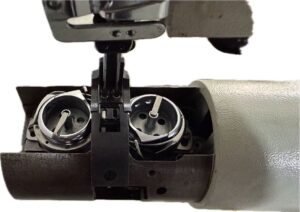
At the heart of the sewing head is KABORY’s Premium Double Rotary Hook System, engineered for precision-critical industrial filtration applications. The dual-hook architecture provides exceptionally stable loop formation and synchronized thread control, even under continuous multi-shift operation.
Each hook operates with ultra-low friction, minimizing heat buildup and preventing thread fraying when sewing high-tenacity PPS, Aramid, or PTFE thread. The system maintains perfect hook timing and alignment across long production runs, ensuring:
-
Consistent seam integrity at high speeds
-
Minimal skipped stitches and extremely low breakage rates
-
Superior performance on thick needle-felt materials
-
Long service life compared with standard rotary hooks
Designed for high-duty industrial use, this advanced hook system elevates seam quality, production reliability, and long-term machine stability—setting a benchmark for professional filter bag manufacturing equipment.
Key Features
✅High-Speed & Stable Output — Up to 2,000 stitches/min with consistent stitch formation
✅Two-Needle Lockstitch — Strong overlap and reinforcement seams for cuffs & bottoms
✅Cylinder-Bed Short Arm — Easy maneuverability on tubular and circular seams
✅Triple Compound Feed — Smooth feeding even on PPS, Aramid, PTFE, and fiberglass
✅Japanese Rotary Hook — Precision performance, minimal skipped stitches, and long life
✅Durable Construction — Cast-iron frame for vibration-free stability
Sewing Machine Comparison – Double Bottom & Reinforcement Layers
While many suppliers claim their machines can handle heavy filter bag materials, real-world results tell a different story.
Double bottoms and reinforcement seams are the most demanding stages in filter bag sewing — exactly where low-end machines fail.
Comparison: General-Purpose Machines vs. KABORY Cylinder-Bed Two-Needle Machine
| Comparison Point | General-Purpose Sewing Machines (Typical) | KABORY Short-Arm Two-Needle Cylinder-Bed Machine |
| Stitch Consistency | Stitch quality may vary on thick or multi-layer felt. | Maintains uniform, reinforced parallel seams on cuffs, bottoms, and reinforcement layers. |
| Fabric Handling on Tubular Felts | Circular sewing may cause puckering or uneven feeding. | Smooth circular feeding with compound feed system, stable on tubular and layered materials. |
| Bottom & Reinforcement Layer Sewing | Often experiences limitations when sewing 4-layer reinforcement overlaps. | Designed to handle heavy multi-layer seams with stable stitch formation and strong seam integrity. |
| Needle & Tension Stability | Higher chance of needle heating or breakage when running continuously. | Balanced tension + optimized needle path reduces wear and maintains stability over long shifts. |
| Output Efficiency | Production speed and seam consistency depend heavily on operator skill. | Stable daily output with lower rework rate, easier to achieve consistent operation across shifts. |
| Machine Vibration & Control | Light frames or chain drives may introduce vibration over time. | Cast-iron frame + synchronous drive ensures low vibration and stable stitch geometry. |
| Service Life & Maintenance | More frequent adjustments or part replacement may be needed. | Industrial-grade build designed for long-duration production with low maintenance frequency. |
Conclusion
👉 Double bottoms and reinforcement seams are the ultimate stress test in filter bag sewing.
Low-end machines typically fail here — skipped stitches, weak joints, costly rework, and customer complaints.
KABORY’s purpose-built two-needle short-arm machine passes this test with stable, strong seams on multi-layer heavy fabrics, making it the first choice for high-temperature, high-value filter bags (aramid, PPS, PTFE, fiberglass) — often backed by warranty contracts where failure is not an option.
Applications
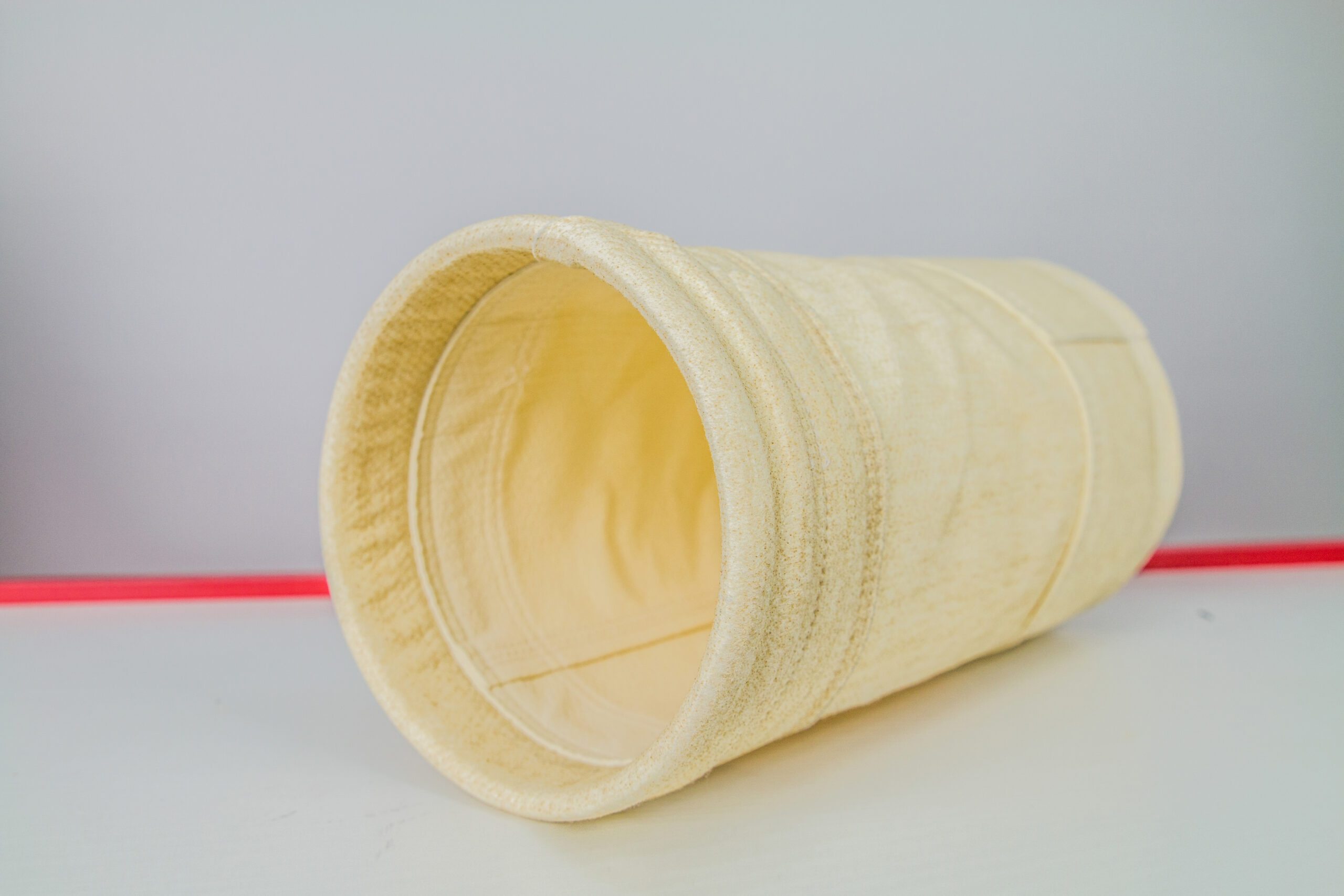
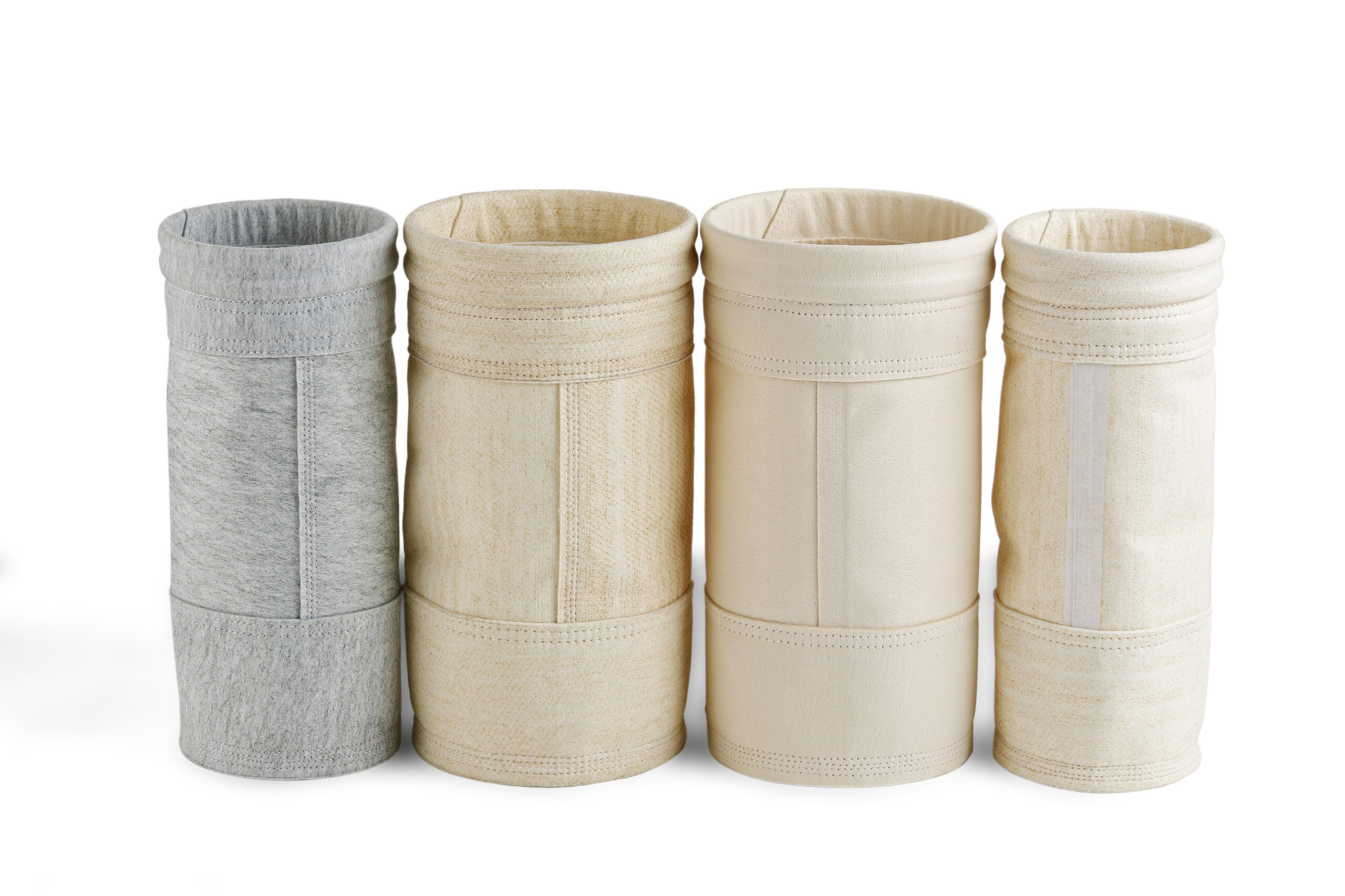
- Filter bag cuffs ,Bottoms and reinforcement layers (100 mm / 150 mm wide)
- Circular bottom seams (4-layer overlaps without skipped stitches)
- Tubular seams for filtration, ducting, and insulation materials
Technical Specifications
| Model | GC2281-1E | GC2281-1B |
| Max Speed | 2000 RPM | 1600 RPM |
| Stitch Length | 0–6 mm | 0–6 mm |
| Needle Bar Stroke | 34 mm | 34 mm |
| Presser Foot | Alternating Walking | Alternating Walking |
| Feed Dog | Twin Rows | Twin Rows |
| Needle Size | DP×17 (14#–24#) | DP×17 (14#–24#) |
| Needle Gauge | 6.4 mm | 6.4 mm |
| Hook | Large Vertical Hook | Large Vertical Hook |
| Bed Size | 90 mm × 245 mm | 90 mm × 650 mm |
| Motor | Servo / Clutch | Servo / Clutch |
| Lubrication | Manual | Manual |
| Voltage | 220V,50Hz | 220V,50Hz |
| Optional: Auto needle positioning, auto backtracking, auto foot lift | ||
Your Benefits
✔ Purpose-built for filter bag production (not modified general-purpose machines)
✔ Higher productivity — 30% more output than chain-driven semi-auto machines
✔ Strong, precise seams on multi-layer heavy materials
✔ Reduced needle breakage and skipped stitches → less rework, less downtime
✔ Designed for long-term stability in industrial filtration factories
How to Choose a Filter Bag Sewing Machine for Industrial Dust Collection
Q1: What makes filter bag sewing different from general textile sewing?
Filter bag sewing involves thick, multi-layer technical materials, repeated pulse-jet cleaning loads, vibration, and often high operating temperatures.
Unlike general textile sewing, seam stability and long-term consistency are far more critical than nominal speed or appearance.
Q2: Are standard double-needle sewing machines suitable for filter bag production?
In most cases, no.
Many standard double-needle machines are light-duty, civil-grade platforms designed for garment or general textile use.
They may function in short trials but typically lack the structural strength required for continuous industrial filter bag production, especially at double bottoms and reinforcement layers.
Q3: Why is a short-arm cylinder-bed design commonly used in filter bag sewing?
A short-arm cylinder-bed structure offers better control and stability when sewing tubular and circular filter bag components.
For standard-length filter bags, this design reduces fabric distortion and improves seam consistency during cuff, bottom, and reinforcement sewing.
Q4: Is a two-needle configuration necessary for industrial filter bags?
Yes, particularly for double bottoms and reinforcement seams.
A two-needle lockstitch configuration distributes stress more evenly along the seam, significantly reducing skipped stitches and improving long-term seam durability under pulse-jet cleaning and vibration.
Q5: Why is a triple compound feed system important for thick filter media?
Industrial filter bags are often made from PPS, aramid, PTFE, fiberglass, and heavy needle felts.
A triple compound feed system keeps the material under synchronized, controlled motion, preventing slippage, uneven feeding, and seam instability—common failure points with light-duty machines.
Q6: What should manufacturers prioritize when selecting a filter bag sewing machine?
Manufacturers should prioritize:
-
Structural rigidity and vibration control
-
Stable feeding and tension on multi-layer materials
-
Proven performance in continuous production
-
Consistent seam quality over long shifts
In industrial dust collection, predictable and repeatable seam performance is far more important than theoretical speed or short-term demonstrations.
📢 Conclusion
When your operation requires a professional filter bag sewing machine, Kabory stands as the only proven Chinese alternative to Dürkopp Adler, delivering the right balance of precision, durability, and cost-effectiveness for global manufacturers.