
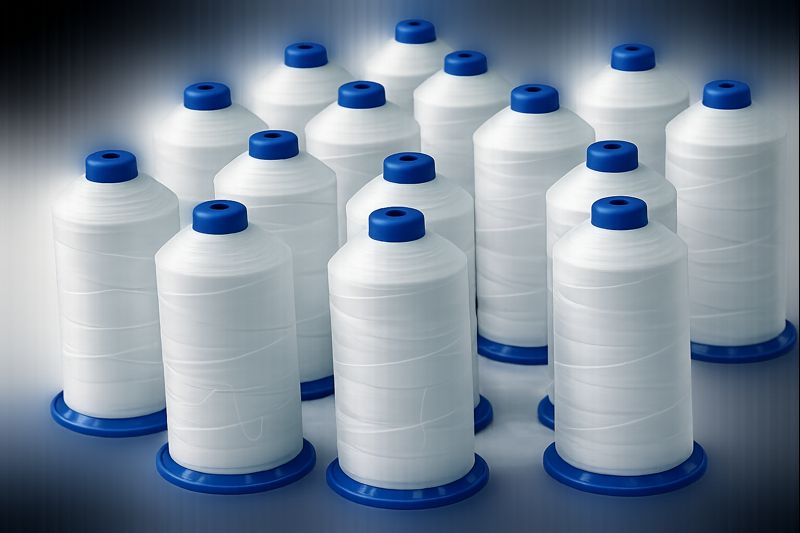
PTFE Sewing Thread for Filter Bag Production
PTFE sewing thread is the industry-standard choice for filter bag production, especially for high-temperature and pulse-jet applications.
Kabory supplies membrane-split PTFE sewing thread, offering superior seam stability, excellent heat and chemical resistance, and reliable performance in automatic and high-speed filter bag sewing processes.
Description
PTFE Sewing Thread as the Industry Standard for High-Temperature Applications
In industrial filter bag manufacturing, PTFE sewing thread is widely recognized as the industry-standard solution, particularly for filter bags operating under high-temperature conditions and pulse-jet cleaning systems.
In real production environments, the durability of the sewn seam is often the limiting factor determining overall filter bag service life. For this reason, PTFE sewing thread has become the preferred and default choice in demanding filtration applications such as cement, steel, power generation, waste incineration, and other high-temperature industrial processes.
At Kabory , the majority of sewing thread used in filter bag production is membrane-split PTFE sewing thread. This selection is based on its proven long-term stability, superior seam performance, and excellent compatibility with automated and high-speed sewing lines.
Why PTFE Sewing Thread Is the Preferred Choice
Exceptional High-Temperature Stability
PTFE sewing thread maintains stable mechanical performance under continuous operating temperatures of 240–260 °C, without melting, embrittlement, or loss of tensile strength.
Excellent Chemical Inertness
PTFE is resistant to most acids, alkalis, and aggressive flue gas components, ensuring seam reliability even in complex chemical environments.
Superior Pulse-Jet Fatigue Resistance
During pulse-jet cleaning, filter bag seams experience repeated mechanical shock and flexing. PTFE sewing thread demonstrates excellent fatigue resistance, helping maintain seam integrity throughout long service cycles.
Long-Term Seam Reliability
Unlike organic fibers that may age, oxidize, or hydrolyze over time, PTFE retains its structure and performance over the full operating life of the filter bag.
Membrane-Split PTFE Sewing Thread Technology
Not all PTFE sewing threads are manufactured using the same process.
For high-performance filter bag applications, membrane-split PTFE sewing thread offers clear structural and operational advantages over conventional extruded PTFE threads.
What Is Membrane-Split PTFE Sewing Thread?
Membrane-split PTFE sewing thread is produced by stretching a PTFE membrane and splitting it into fine, fibrillated structures, rather than twisting rigid solid filaments.
This process creates a micro-fibrillated, network-like structure that combines flexibility, strength, and controlled surface friction—properties that are critical for reliable filter bag sewing.
Why PTFE Sewing Thread Failure Directly Determines Filter Bag Reliability
In high-temperature and pulse-jet filtration, sewing thread failure causes immediate seam opening and filter bag failure.
Learn why manufacturing method matters more than material name.
Manufacturing Process Standard — Internationally Aligned Membrane-Split Technology
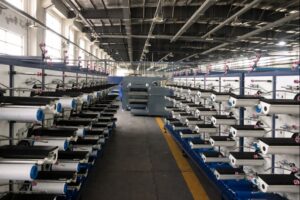
All PTFE sewing threads supplied by Kabory Filters are manufactured using an internationally aligned membrane-split PTFE production process, consistent with the mainstream manufacturing routes adopted by leading global PTFE thread producers.
This production route is based on PTFE membrane stretching and controlled splitting, rather than extrusion-based filament forming.
The result is a uniform, flexible, and stable thread structure specifically designed for high-temperature, high-speed industrial sewing.
Why the Manufacturing Process Matters
The performance of PTFE sewing thread is determined not only by raw material, but fundamentally by the manufacturing process.
Compared with extruded PTFE threads, membrane-split PTFE sewing thread offers:
-
More consistent thread diameter and structure
-
Improved flexibility and bending fatigue resistance
-
Stable surface characteristics for predictable tension control
-
Reliable performance in automatic and high-speed sewing machines
These characteristics are essential for continuous industrial filter bag production, where sewing stability directly affects productivity and seam quality.
Practical Advantages in Filter Bag Production
-
Improved seam stability under pulse-jet cleaning
The fibrillated structure distributes mechanical stress more evenly, enhancing fatigue resistance. -
Better stitch locking and reduced seam slippage
Compared with smooth filament PTFE threads, membrane-split PTFE provides improved frictional engagement with filter media. -
More stable performance in high-speed sewing
Enhanced flexibility and surface structure contribute to smoother thread feeding, stable tension control, and reduced thread breakage.
As a result, membrane-split PTFE sewing thread is particularly well suited for automatic and high-speed filter bag sewing machines, where consistency and long-term reliability are essential.
Limitations of Extruded PTFE Sewing Thread in Filter Bag Applications
Extruded PTFE sewing thread is often selected due to its lower cost.
However, in practical filter bag manufacturing and long-term operation, this production method presents several inherent limitations that can affect sewing stability and filter bag reliability.
Inconsistent Thread Diameter
Extruded PTFE threads are formed through solid extrusion and cooling, which may result in diameter variation along the thread length.
During automated or high-speed sewing, this can cause unstable tension and increase the risk of thread breakage or skipped stitches.
High Stiffness and Limited Flexibility
Due to its dense filament structure, extruded PTFE sewing thread is generally stiffer and less flexible.
This reduced flexibility can lead to poor bending performance through needles, guides, and tensioners, increasing the likelihood of thread jamming.
Reduced Stitch Locking with Filter Media
Extruded PTFE threads typically have smooth surfaces and lack a fibrillated structure.
As a result, frictional engagement with filter media is limited, potentially causing stitch slippage and insufficient stitch locking.
Stress Concentration Under Pulse-Jet Cleaning
In pulse-jet cleaned filter bags, repeated tensile and bending forces act on the sewing seam.
Limited flexibility in extruded PTFE thread can lead to stress concentration at stitch turning points, accelerating fatigue-related seam damage over long-term operation.
Impact on Filter Bag Service Life
While these issues may not be immediately visible, they can gradually develop under continuous high-temperature operation and frequent pulse-jet cleaning, potentially leading to:
-
Stitch loosening
-
Partial seam opening
-
Reduced sealing performance
-
Shortened filter bag service life
Split-Film vs Extruded PTFE Thread – Technical Comparison
| Parameter | Extruded PTFE Thread | Split-Film PTFE Thread |
|---|---|---|
| Manufacturing method | Direct extrusion | Film splitting + twisting |
| Diameter uniformity | ❌ Poor | ✅ Excellent |
| Flexibility | ❌ Rigid | ✅ Optimally flexible |
| Surface friction | High | Low |
| Stitch stability | Prone to skips & breaks | Stable |
| Suitable sewing speed | ≤ 5 m/min | 10–12 m/min |
| Automation compatibility | Limited | Highly suitable |
| Long-term fatigue resistance | Moderate | Excellent |
| Breaking strength (1250D) | ≤ 35 N (typical max) | ≈ 58 N (average), higher peak values |
✔️ Recommended for automated sewing of high-temperature filter bags.
Common Sewing Issues with PTFE Sewing Thread — And How They Are Solved
PTFE sewing thread offers excellent heat and chemical resistance.
In practice, sewing issues such as thread breakage, jamming, or skipped stitches are usually related to thread structure or sewing setup, rather than the PTFE material itself.
-
Thread breakage is commonly associated with rigid extruded filaments and poor flexibility.
-
Thread jamming is typically caused by stiffness or inconsistent thread diameter.
-
Skipped stitches are mainly related to insufficient stitch locking or improper thread–needle matching.
Membrane-split PTFE sewing thread addresses these issues through its flexible, fibrillated structure and stable surface characteristics.
Split-Film vs. Extruded PTFE Sewing Thread — Technical Comparison
| Parameter | Split-Film (Membrane-Split) PTFE Sewing Thread | Extruded PTFE Sewing Thread |
| Manufacturing method | PTFE membrane stretching & splitting | Solid extrusion forming |
| Filament structure | Micro-fibrillated multifilament | Mono- or rigid multifilament |
| Thread diameter uniformity | High, consistent along length | Variable, local thick/thin sections |
| Softness / flexibility | High, good bending performance | Low, relatively stiff |
| Surface characteristics | Controlled friction, stable feeding | Irregular surface, unstable feeding |
| Friction with filter media | Balanced, good stitch locking | Insufficient, prone to stitch slippage |
| Suitable sewing speed | 10–12 m/min | ≤5 m/min |
| Breaking strength | Up to 68 N | 25–30 N |
| Behavior in automatic sewing | Stable, low breakage rate | Frequent jamming / breakage risk |
| Pulse-jet fatigue resistance | Excellent | Limited |
| Long-term seam stability | Consistent | Prone to breaks / skipped stitches |
| Impact on filter bag service life | Supports long service life | May shorten service life over time |
Compatibility with Automatic Filter Bag Sewing Machines
Membrane-split PTFE sewing thread is widely used in automated filter bag production lines due to its stable and predictable sewing behavior:
-
Consistent tension during continuous operation
-
Low breakage rate at high sewing speeds
-
Uniform stitch formation along long seams
-
Reliable performance in continuous, multi-shift production
These characteristics make it a preferred choice for modern filter bag factories focused on productivity and repeatable quality.
Other Sewing Thread Options for Filter Bag Production
While PTFE sewing thread—particularly membrane-split PTFE—is the primary and recommended solution for high-temperature applications, other sewing thread materials are used in specific operating conditions.
Sewing Thread Material Comparison
| Sewing Thread Material | Typical Continuous Temperature | Key Characteristics | Typical Applications |
| PTFE (Membrane-Split) | up to 240–260 °C | Excellent heat resistance, chemical inertness, superior fatigue resistance, stable stitches | High-temperature, pulse-jet cleaned filter bags |
| Meta-Aramid | up to 200–220 °C | High strength, good thermal stability, cost-effective | Medium-to-high temperature filter bags |
| PPS | up to 190 °C | Good resistance to moisture and specific chemicals | Selected chemical environments |
| Polyester | up to 130–150 °C | High strength, economical | Low-temperature filter bags |
Note: For continuous high-temperature and pulse-jet applications, membrane-split PTFE sewing thread remains the most reliable and widely adopted solution.
Sewing Thread Selection Guidance
-
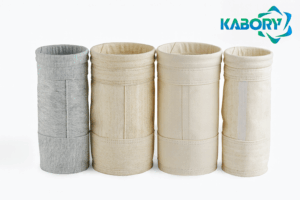
High-temperature or pulse-jet filter bags (≥200 °C):
Membrane-split PTFE sewing thread -
Medium-temperature applications with cost considerations:
Meta-aramid sewing thread -
Lower temperature or specific chemical conditions:
PPS or polyester sewing thread -
Thread TypeTemperature ResistanceBreaking StrengthKey Features
High-Tenacity Polyester ≤150°C ≥60N ±5% Strong, abrasion-resistant High-Tenacity Polyethylene ≤100°C ≥55N ±5% Lightweight, chemical-resistant Split-Film PTFE ≤260°C ≥68N ±5% Heat & chemical resistant, smooth sewing Acrylic Thread ≤280°C ≥25N ±5% Chemically stable, good heat resistance PPS Thread ≤190°C ≥25N ±5% Hydrolysis- and oxidation-resistant Meta-Aramid Thread ≤200°C ≥25N ±5% High strength and thermal stability Fiberglass Thread ≤280°C ≥25N ±5% Excellent high-temp performance
Correct sewing thread selection plays a critical role in seam durability and overall filter bag service life.
Summary
PTFE sewing thread has become the industry standard and most widely used solution in modern filter bag production due to its exceptional resistance to heat, chemicals, and mechanical fatigue.
By adopting membrane-split PTFE sewing thread as the core solution—while offering alternative materials for defined operating conditions—TW Filters provides sewing thread solutions based on real industrial experience and long-term performance requirements.
Long-Term Commitment to Filter Bag Sewing Quality
We supply high-quality sewing threads that fully meet the sewing requirements of filter bag production and perform reliably under a wide range of operating conditions. This capability is built on our deep understanding of both filter bag manufacturing processes and real-world filtration environments.
Having been continuously engaged in the filter bag industry for over 20 years, we understand that long-term seam reliability depends not only on material selection, but also on how filter bags are produced, operated, and maintained in actual industrial service. Based on this experience, we will continue to focus on the long-term supply and development of high-quality sewing threads for demanding filter bag applications.