
Automatic Snap Band Welding Machine
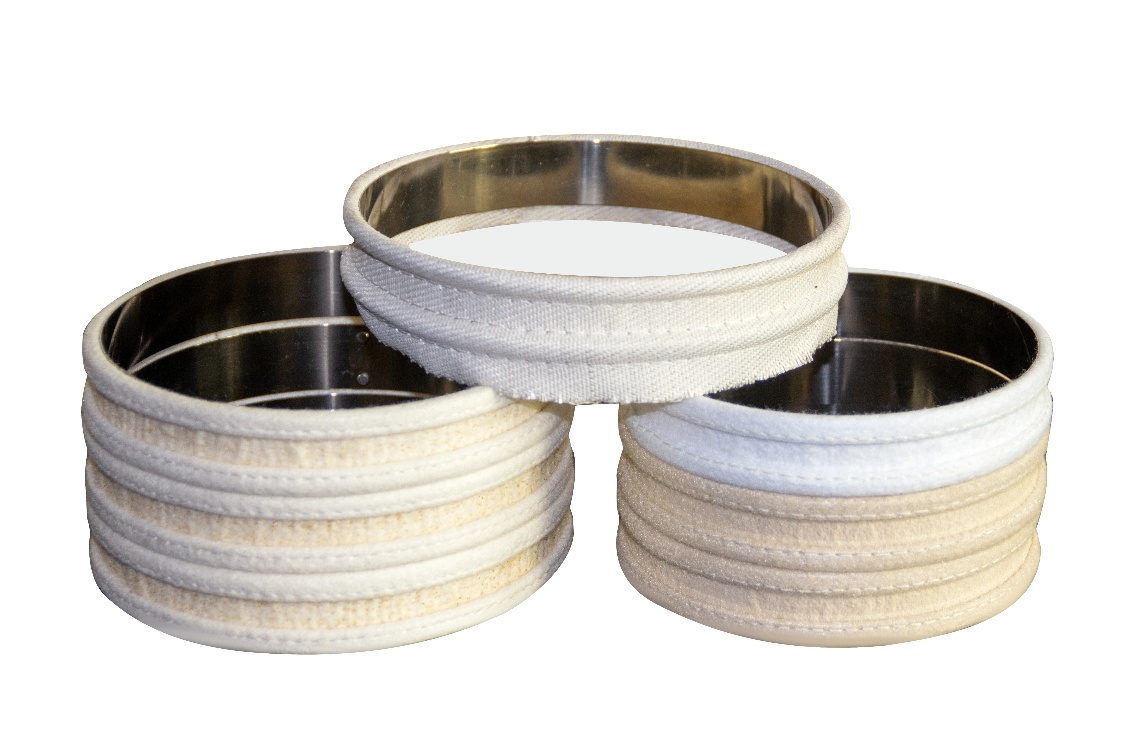
KABORY’s world-first, commercially proven Automatic Snap Band Welding Machine is engineered for the automated production of stainless steel snap bands used in filter bags, flexible connectors, and industrial sealing rings.
The system integrates automatic strip feeding, fixed-length cutting, circular forming, precision alignment, four-point controlled resistance welding, counting, and finished-product discharge into one continuous production process—eliminating rivets, reducing manual labor, and delivering consistent joint quality and reliable production performance.
Description
World’s First Automatic Snap Band Welding Machine
It replaces rivets and mechanical fastening with continuous metallurgical bonding
High-Speed, Rivet-Free Welding for Stainless Steel Snap Bands and Sealing Rings
KABORY’s world-first Automatic Snap Band Welding Machine is specifically engineered for the automated production of stainless steel snap bands used in industrial filter bags, dust collection systems, ventilation systems, flexible connectors, and industrial sealing applications.
The system replaces conventional rivets, punched holes, and mechanical fastening with precision forming and controlled resistance welding. By integrating automatic strip feeding, fixed-length cutting, circular forming, alignment, four-point welding, counting, and finished-product discharge into one continuous process, it delivers stronger and more consistent joints, cleaner production, reduced manual labor, and improved long-term reliability.
Commercially Proven at a Customer Site in France
During an on-site production test, the machine operated continuously for two hours without any intermediate shutdown.
- Snap band diameter: 125 mm
- Stainless steel strip width: 30 mm
- Stainless steel strip thickness: 0.40 mm
- Continuous production time: 90 minutes
- Finished output: 800 snap bands
- Operators required: 1
- Intermediate machine stops: 0
This verified production result demonstrates an output capacity of more than 3,200 snap bands per eight-hour shift under comparable production conditions.
Set Once, Run Continuously with Minimal Operator Intervention
Once the machine parameters have been properly set and adjusted, no manual intervention is required during normal continuous production.
The system automatically completes strip feeding, fixed-length cutting, circular forming, precision positioning, resistance welding, counting, and finished-product discharge. The welding unit operates continuously and synchronously with the complete production line, ensuring stable cycle times, consistent welding quality, and repeatable finished dimensions.
The operator is only required to monitor the production status and replenish raw materials when necessary. This significantly reduces dependence on manual operation, minimizes production interruptions, and improves overall production efficiency and long-term operating stability.
Industry Background: Why Filter Bag Snap Band Joining Really Matters
In industrial filtration systems, snap bands are far more than simple accessories. They are critical sealing and structural components responsible for maintaining consistent compression, preventing dust leakage, and ensuring airtight performance throughout long-term operation.
In demanding industrial environments, snap bands must withstand:
- Continuous pulse-jet cleaning vibration
- Repeated thermal expansion and contraction
- Sustained radial compression loads
- Long-term operation without loosening, deformation, or loss of sealing force
Under these operating conditions, joint fatigue resistance and circumferential geometric continuity directly determine sealing integrity, dust leakage prevention, system reliability, maintenance intervals, and the overall service life of the filtration system.
Typical Applications
Filter bags, flexible connectors, industrial ducting, pneumatic conveying systems, hose and clamp systems, and other industrial sealing applications where long-term airtight performance and mechanical durability are essential.
Why Traditional Riveted Snap Band Joining Is Fundamentally Limited
Redefining Snap Band Manufacturing
Stainless steel snap bands are widely used across industrial filtration, dust collection, ventilation, flexible connector, containment, and sealing applications. As these industries continue to evolve, manufacturers are placing greater emphasis on production consistency, joint reliability, process efficiency, and long-term performance.
KABORY has introduced a new approach to snap band manufacturing by combining precision forming with controlled resistance welding in one integrated production solution. The system creates permanent metallurgical joints with consistent quality while simplifying the overall manufacturing process and reducing dependence on manual operations.
From automatic strip feeding, fixed-length cutting, circular forming, precise alignment, and four-point resistance welding to automatic counting and finished-product discharge, each production stage is engineered to operate as part of one continuous process.
The result is cleaner production, stable repeatability, stronger and more consistent joints, improved efficiency, reduced labor requirements, and reliable long-term performance.
More than a machine, KABORY represents a new manufacturing standard for stainless steel snap bands—supporting the next generation of industrial filtration, ventilation, flexible connector, containment, and sealing applications.
As industrial filtration and containment systems continue to evolve toward:
-
Higher operating temperatures
-
Higher pulse-cleaning frequency
-
Longer maintenance intervals
-
Continuous multi-shift duty cycles
the limitations of mechanically fastened snap band structures become increasingly pronounced.
This is not a manufacturing quality issue.
It is a fundamental limitation of mechanical joint design.
No matter how carefully executed, mechanically fastened snap bands remain assemblies composed of discontinuous structural segments.
From Riveted Mechanical Fastening to a Metallurgically Bonded — a cleaner, stronger way to produce filter bag snap bands.
To address these inherent structural limitations, KABORY developed the world’s first automatic Snap Band Welding Machine, engineered specifically for industrial filtration snap band applications.
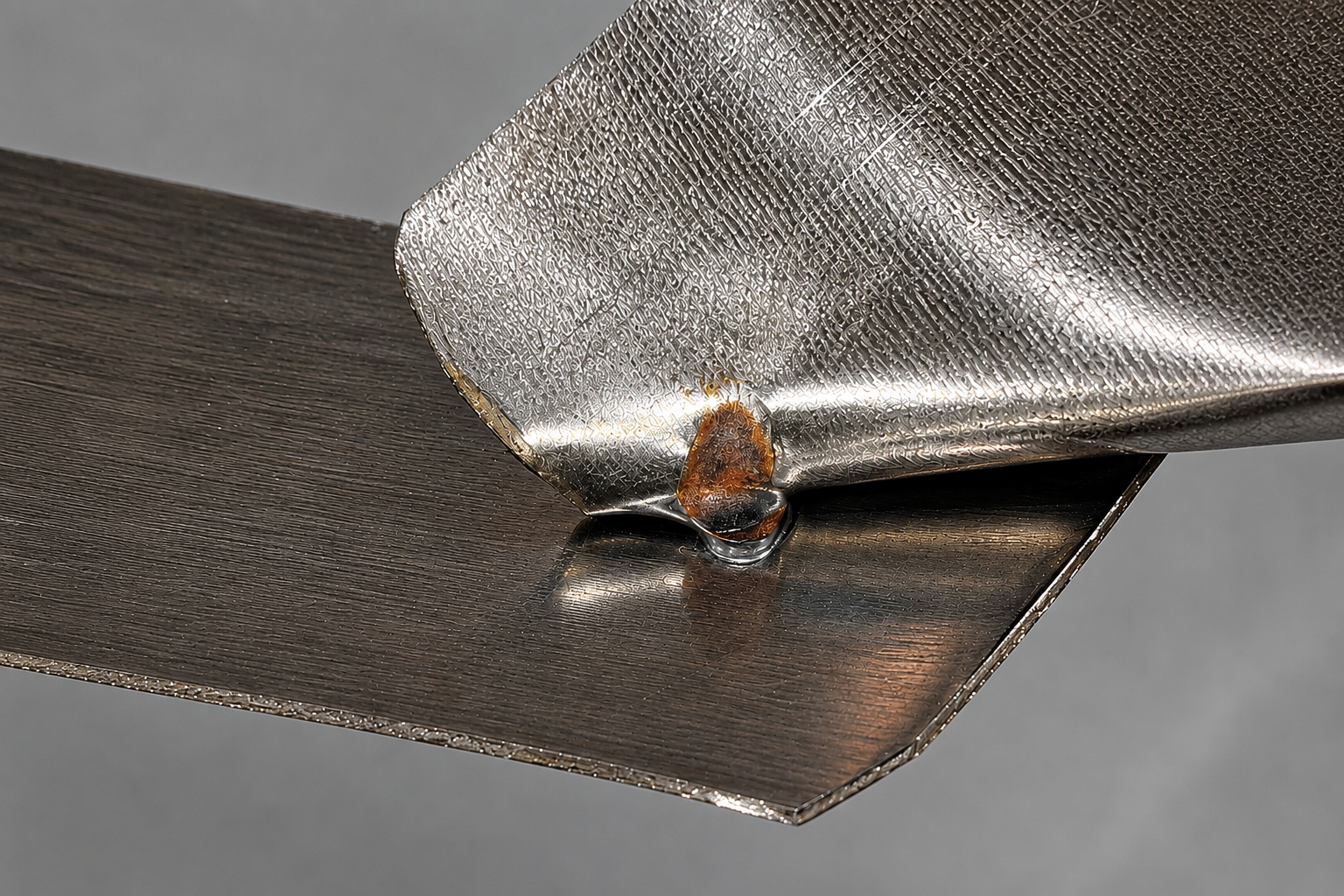
Instead of relying on mechanical fastening, this system joins snap band ends using four-point controlled fusion welding, forming a continuous metallurgical bond.
This process:
-
Eliminates rivets, punched holes, and discrete fastening interfaces
-
Removes localized stress concentration points
-
Preserves uniform stiffness and geometry along the full circumference
In this system, the snap band is no longer assembled.
It is structurally continuous.
The joint is no longer a connection point, but an integral part of the ring itself, enabling uninterrupted load transfer and true metallurgical continuity.
Engineering Validation of the Automatic Snap Band Welding Machine Under Real Operating Conditions
Long-term sealing reliability is not achieved by increasing local joint strength alone.
It is achieved by eliminating structural discontinuities altogether.
By replacing mechanical fastening with continuous metallurgical bonding, the Automatic Snap Band Welding Machine directly addresses the primary failure mechanisms observed in long-term filtration service:
-
Fatigue cracking initiated at joint interfaces
-
Progressive loosening under vibration
-
Loss of sealing force caused by uneven circumferential stiffness
The result is a snap band structure capable of maintaining stable geometry and consistent sealing performance throughout extended service life.
Real Tensile Strength Test Comparison
Verified Structural Performance Under Tensile Testing
The structural performance of the joint was evaluated using a tensile testing machine. Each sample was subjected to a continuously increasing tensile load until structural failure occurred.
Test Conditions
Material: SUS301 Stainless Steel
Welded Sample Thickness: 0.40 mm
Riveted Sample Thickness: 0.45 mm
Condition: Same material grade and hardness(HV 600)
| Joint Type | Tensile Strength (N) | Difference |
| Riveted Joint | ≈ 4,200 N | baseline |
| Welded Joint | ≈ 7,200 N | +71% improvement |
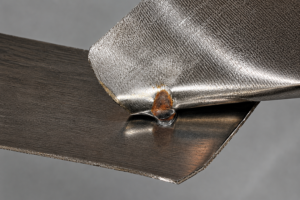
Although the welded sample used a thinner stainless steel strip, it achieved significantly higher tensile strength during the actual comparison test.
During tensile testing, the observed failure characteristics were also distinctly different.
- Riveted Joint: Failure was observed through hole enlargement, rivet pull-through, or rivet shearing.
- Welded Joint: The base material underwent significant plastic deformation and elongation before fracture, while the welded fusion zone remained intact.
These observed results indicate that the welded joint transfers tensile load through a continuous metallurgical bond rather than localized mechanical fastening, resulting in a more stable and continuous structural load path.
Automation for Structural Consistency
Automation in the KABORY Automatic Snap Band Welding Machine is not introduced merely to increase production speed.
Its primary objective is to ensure that the structural performance demonstrated during tensile testing can be reproduced consistently throughout industrial-scale manufacturing.
The system is designed to provide:
- Consistent weld quality with minimal dependence on operator skill
- Repeatable joint geometry and overlap accuracy
- Stable metallurgical bonding through precisely controlled resistance welding
- Consistent positioning, forming, and welding throughout production
- Stable production rhythm for high-volume manufacturing
- Seamless integration into automated filter bag production lines
By combining precision positioning, automatic forming, controlled resistance welding, and intelligent process control, the KABORY Automatic Snap Band Welding Machine transforms structural performance from an operator-dependent result into a repeatable manufacturing standard.
The goal of automation is not simply to produce more snap bands—it is to produce every snap band with consistent structural performance.
Lower Total Manufacturing Cost
The KABORY Automatic Snap Band Welding Machine helps reduce overall manufacturing costs through process optimization rather than simply eliminating rivets.
Key cost-saving benefits include:
- Elimination of rivets and fastening consumables
- No rivet feeding or installation operations
- Reduced labor requirements
- Fewer production steps
- Improved production efficiency
- More consistent product quality with less rework
- Reduced maintenance associated with riveting equipment
By replacing mechanical fastening with automated resistance welding, manufacturers can simplify production while improving both productivity and long-term manufacturing consistency.
Key Technical Advantages
-
Continuous metallurgical joint without rivets or punched holes
-
Uniform circumferential stiffness and load distribution
-
Superior resistance to vibration, thermal cycling, and fatigue
-
Highly consistent welding quality through full automation
-
Designed specifically for stainless steel snap bands used in industrial filtration
Production Workflow
The Automatic Snap Band Welding Machine integrates forming, joining, and quality consistency into a single continuous production workflow:
-
Automatic coil feeding
-
Fixed-length cutting
-
Snap band forming
-
Four-point controlled fusion welding
-
Output counting and stacking
One Operator, Continuous Automatic Production
Once the production parameters have been properly set, the machine automatically completes strip feeding, fixed-length cutting, circular forming, precision alignment, four-point controlled resistance welding, counting, and finished-product discharge.
During normal continuous production, no manual process adjustment is required. The operator is mainly responsible for monitoring the production status, replenishing raw materials when necessary, and carrying out routine quality checks.
In a verified production test conducted at a customer site in France, the machine continuously produced 800 Ø125 mm snap bands in 90 minutes without any intermediate shutdown, achieving an average production speed of approximately 8.9 pcs/min.
Under current standard production conditions, machine speed varies according to snap band diameter:
Current Production Speed
- Ø90–200 mm: 8 pcs/min
- Ø205–300 mm: 7 pcs/min
- Ø305–400 mm: 6.3 pcs/min
These figures represent the current standard production speeds under normal operating conditions.
Actual shift output may vary depending on snap band diameter, raw-material replacement time, inspection requirements, and site operating conditions.
Compared with traditional riveting production requiring multiple working stations and operators, the KABORY system significantly reduces labor requirements while improving production consistency, joint quality, dimensional repeatability, and overall operating stability.
Current Production Speed by Snap Band Diameter
- Diameter 90–200 mm: up to 8 pcs/min
- Diameter 205–300 mm: up to 7.5 pcs/min
- Diameter 305–400 mm: up to 6.3 pcs/min
These figures represent the current standard production speeds of the machine under normal operating conditions.
Based on the current production speed, one operator can achieve high-volume continuous production throughout an eight-hour shift. Actual output may vary depending on snap band diameter, raw-material replacement time, inspection requirements, and site operating conditions.
The system maintains a stable and repeatable production cycle across the full diameter range while requiring only one operator for normal operation.
Compared with traditional riveting production, which typically requires multiple working stations and operators, the KABORY Automatic Snap Band Welding System significantly reduces labor requirements while improving production consistency, joint quality, dimensional repeatability, and overall operating stability
Technical Specifications
| Parameter | Specification |
| Diameter Range | Ø90–220 mm / Ø90–300 mm / Ø90–400 mm |
| Steel Band Thickness | 0.20–0.50 mm |
| Steel Band Width | 25 / 30 / 35 mm |
| Edge Alignment Accuracy | ±0.30 mm |
| Joint Structure | Four-Point Controlled Resistance Welding |
| Output Capacity | Ø90–200 mm: 8 pcs/min Ø205–300 mm: 7.5 pcs/min Ø305–400 mm: 6.3 pcs/min |
| Power | 380V, Three-phase |
| Air Supply | 0.5–0.7 MPa |
| Control System | PLC Control |
| Welding Technology | Four-Point Controlled Fusion Welding |
| Material Compatibility | Stainless steel |
| Safety Features | Emergency stop, protective housing |
FAQ: Why Snap Band Welding Matters in Industrial Filtration
Q: Why are snap bands important in industrial filtration systems?
A: Snap bands are not simply accessories. They are important sealing, positioning, and structural components.
In filter bags, the snap band helps maintain stable radial compression between the filter bag cuff and the tube sheet opening. In flexible connectors, ducting systems, and industrial sealing rings, it supports secure installation, dimensional stability, and reliable sealing.
A precisely formed snap band helps reduce local deformation, maintain a stable circular profile, and support consistent performance under repeated installation and continuous operating conditions.
Q: Is snap band reliability determined only by material selection?
A: No. Material grade and hardness are important, but overall reliability also depends on forming accuracy, overlap consistency, joint strength, fatigue resistance, and long-term geometric stability.
Even high-quality stainless steel may not provide reliable performance if the joint geometry or manufacturing process is inconsistent.
Q: What are the structural characteristics of traditional riveted snap bands?
A: Riveted snap bands rely on punched holes and localized mechanical fastening.
The joint strength is influenced by hole quality, rivet geometry, installation consistency, strip thickness, and local stress concentration around the fastening points. Under repeated vibration, radial compression, thermal cycling, or repeated installation and removal, these localized areas may experience gradual deformation or reduced tightness.
Riveting remains a widely used joining method, but its structural performance depends strongly on the consistency of several separate manufacturing steps.
Q: How does snap band welding improve joint performance?
A: Snap band welding eliminates punched holes and separate mechanical fasteners.
KABORY’s four-point precision resistance-welding process creates controlled metallurgical bonding across the overlapping section. This allows tensile loads to be transferred through the welded area and surrounding base material rather than being concentrated around punched holes and rivet contact points.
The result is a more integrated joint structure with improved load-transfer continuity, joint consistency, and resistance to mechanical loosening.
Q: What was observed during tensile testing?
A: The joint samples were tested using a tensile testing machine with a continuously increasing tensile load.
For the riveted samples, the observed failure modes included hole enlargement, rivet pull-through, and rivet shearing.
For the welded samples, the stainless steel base material underwent significant plastic deformation and elongation before fracture. In the best-performing samples, the base material fractured while the welded area remained intact.
Under the tested conditions, the welded sample reached approximately 7,200 N, compared with approximately 4,200 N for the riveted sample.
Q: How can welded snap bands help improve sealing reliability?
A: A precisely formed and consistently welded snap band helps maintain a stable circular profile and uniform radial compression.
By eliminating punched holes and reducing the risk of localized joint loosening, the welded structure can help reduce deformation around the overlap area and support more consistent contact between the filter bag cuff and the tube sheet opening.
Actual sealing performance also depends on the filter bag design, snap band dimensions, cuff construction, tube sheet tolerances, and installation quality.
Q: What makes KABORY’s Automatic Snap Band Welding Machine different?
A: KABORY’s Automatic Snap Band Welding Machine combines automatic strip feeding, precision length control, forming, overlap positioning, and four-point precision resistance welding within one integrated manufacturing process.
The system is designed to provide:
- Repeatable snap band diameter and overlap accuracy
- Precisely controlled welding parameters
- Consistent joint geometry and structural performance
- Reduced dependence on operator skill
- No rivets or mechanical fastening consumables
- Stable production for industrial-scale manufacturing
Automation is used not only to increase production speed, but also to reproduce consistent joint quality from one snap band to the next.
Q: Does the welding process reduce manufacturing costs?
A: Yes. The economic benefit extends beyond eliminating the cost of rivets.
The welding process removes the need for rivet purchasing, storage, feeding, punching, and installation. It also reduces manufacturing steps, operator dependence, fastening-related maintenance, and the risk of inconsistent assembly.
Together, these improvements can help lower the total manufacturing cost per finished snap band.
Q: Where can welded snap bands be used?
A: Welded stainless steel snap bands can be used in:
- Industrial filter bags
- Dust-collection systems
- Flexible connectors
- Ventilation and ducting systems
- Industrial sealing rings
- Containment and pneumatic-conveying applications
- Other products requiring precise circular metal-band structures
The appropriate material, thickness, diameter, and joint design should be selected according to the operating environment and application requirements.