
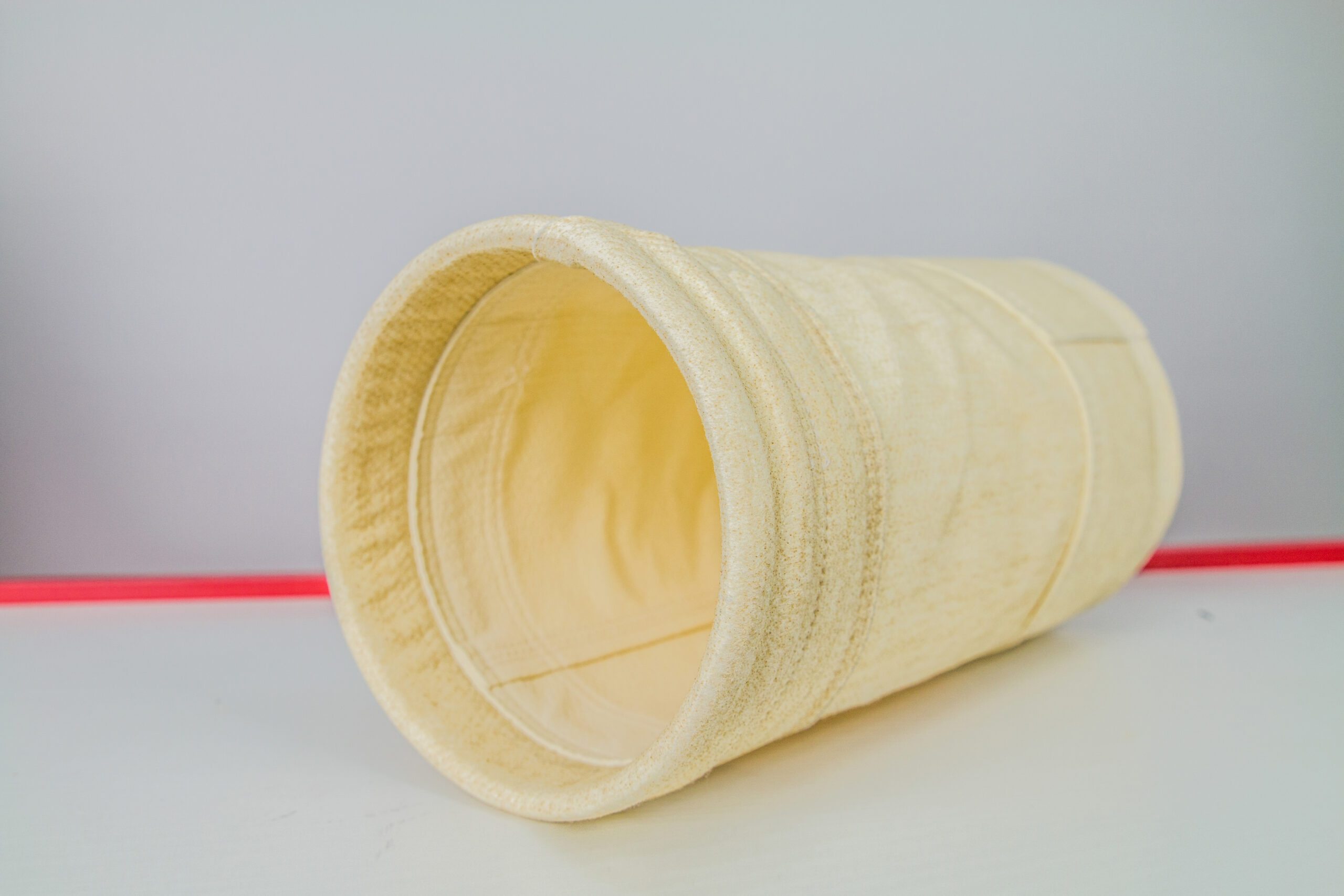
Automatic Filter Bag Cutting Machine
High-precision automatic cutting machine designed for filter bag cuffs, discs, reinforcement layers, and felt strips.
It delivers uniform dimensions, clean edges, and repeatable accuracy across all materials, replacing multiple manual cutting steps with a single automated workflow.
Description
Automatic Filter Bag Cutting Machine-Advanced automated cutting system designed for industrial filter bag production.
It delivers precise, consistent cutting for cuffs, bottom discs, reinforcement layers, and felt strips across all technical filter materials.
By replacing traditional manual and punch-cutting methods, this machine ensures cleaner edges, higher repeatability, and significantly improved productivity.
High-Precision Multi-Function Cutting System for Filter Bag Components
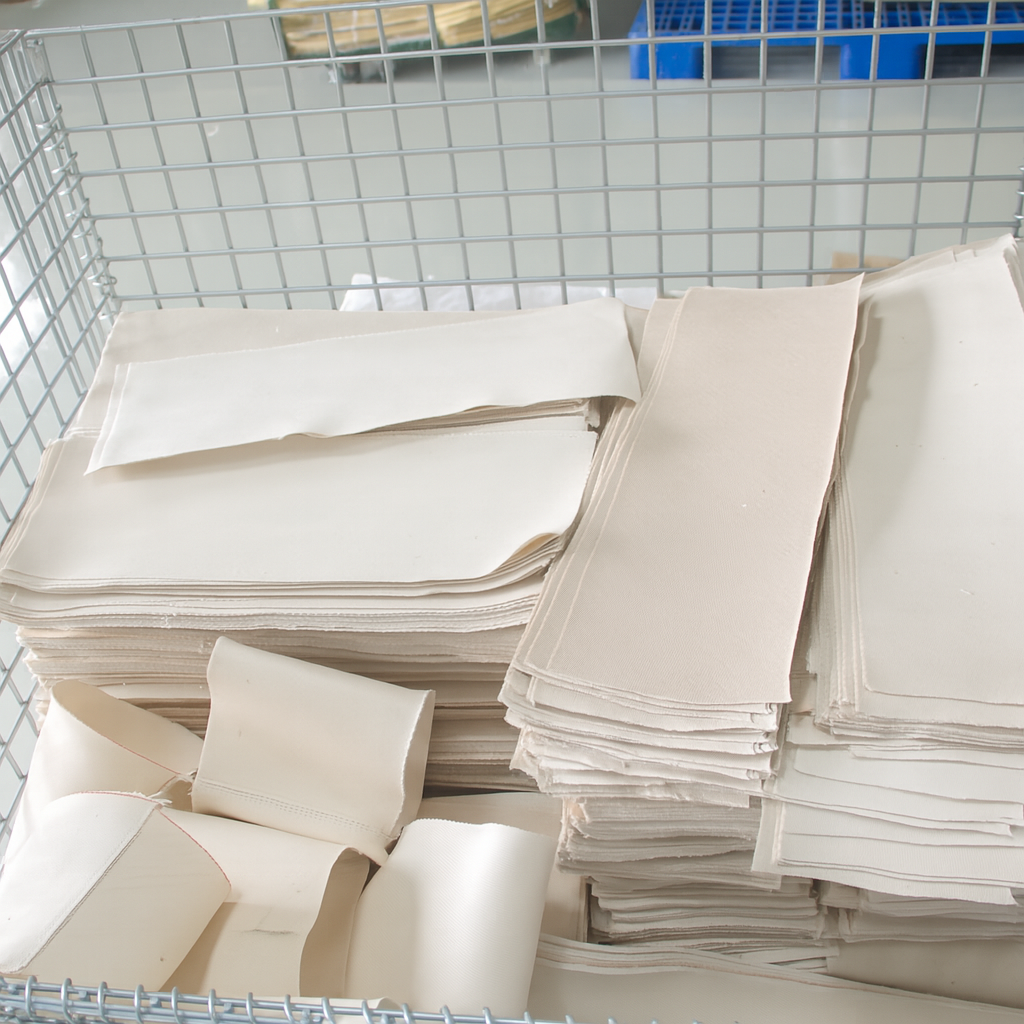
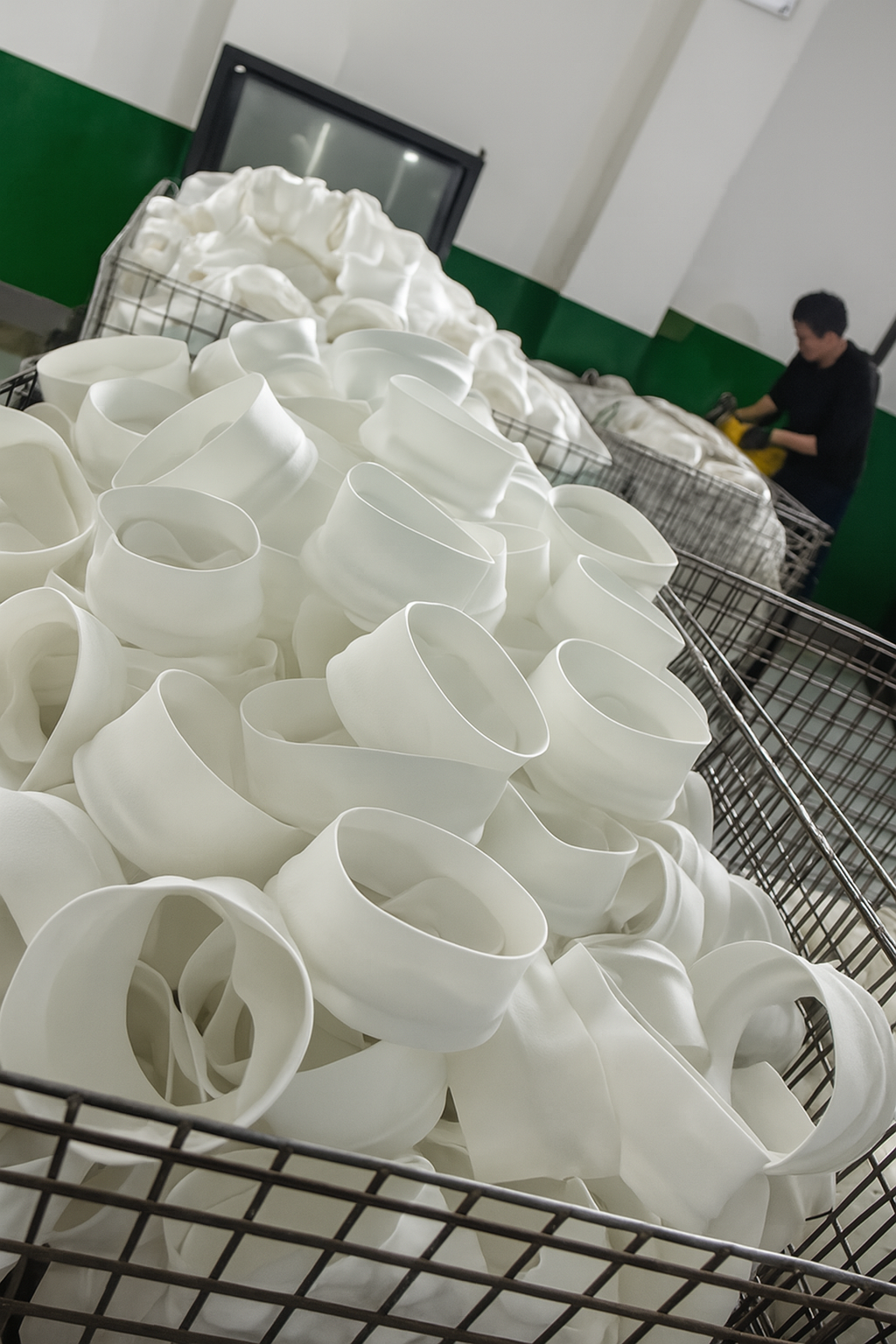
• Cuff fabric for bag top openings
• Bottom discs in all diameters
• Reinforcement layers (100 / 150 mm or custom sizes)
• Felt strips for cuffs, discs, and structural sealing
• Pre-cut parts for liquid filter bag production
Replacing Multi-Station Manual Cutting
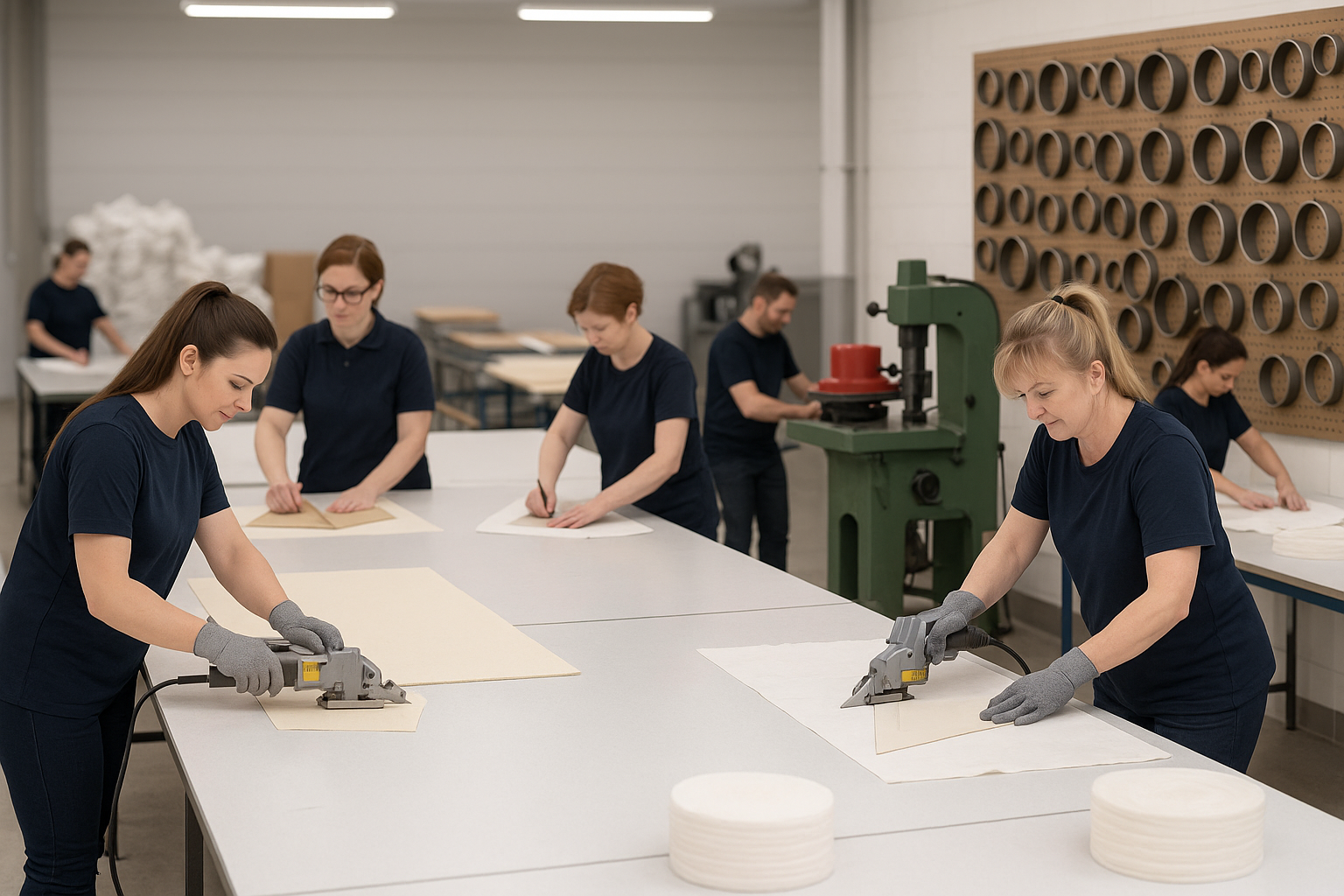
In traditional workshops, these components require multiple stations and at least six workers, involving repeated measuring, template marking, hand-cutting, and disc punching.
This automated system consolidates the entire workflow into a single machine operated by one person — dramatically reducing labor demand, improving consistency, and boosting factory competitiveness.
What materials can this machine cut?
-
Needle-punched felts
-
Fiberglass filter media
-
Hybrid fiberglass felts
- PTFE Needle Felt
-
Aramid, PPS, PTFE,polyester, polypropylene, and their blends
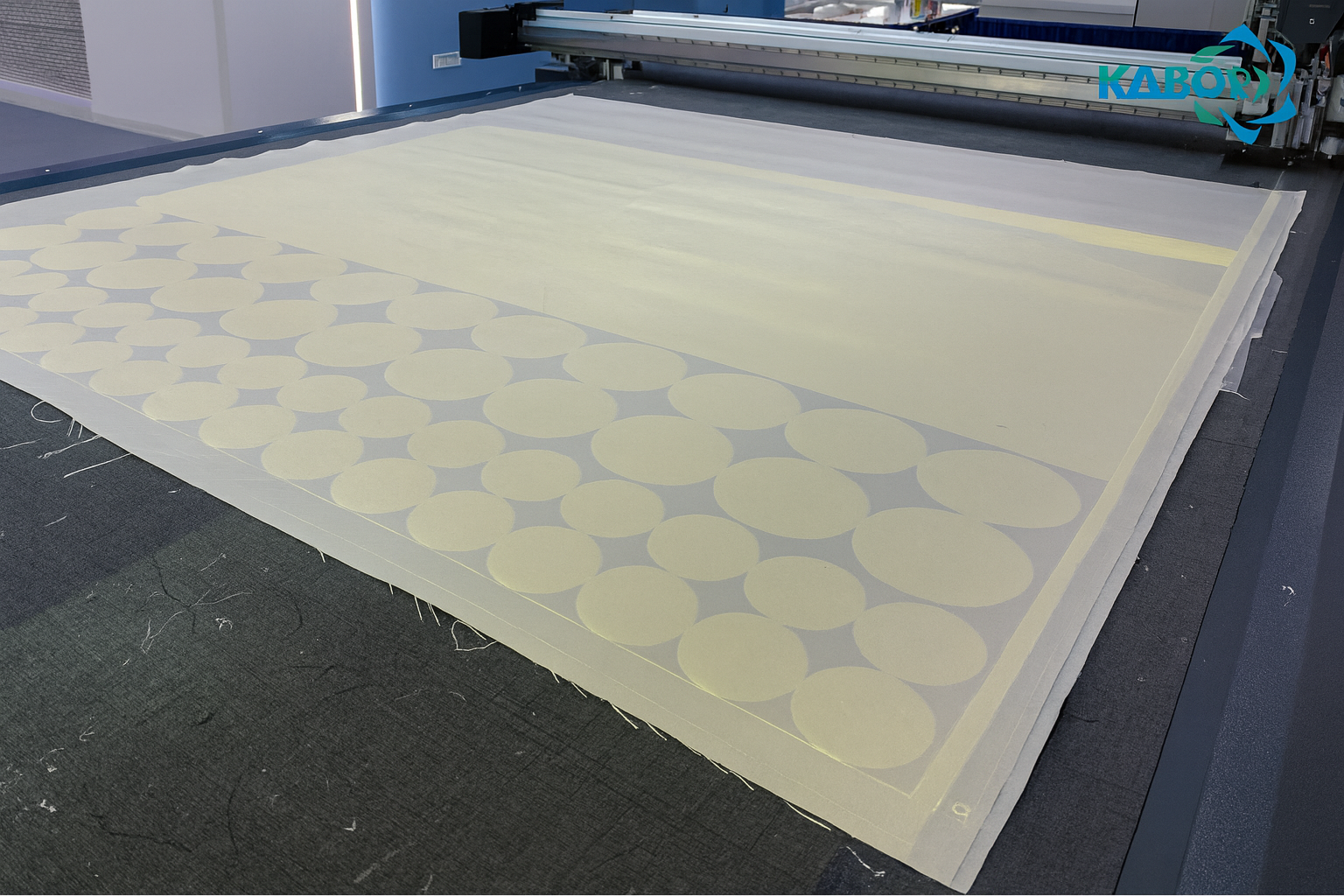
High-Precision Cutting System for Industrial Filter Bags ,with servo motion control and digital shape programming, it delivers consistent, clean, and repeatable cuts of any 2D shape without physical dies, setup changes, or manual intervention.
Smart Nesting Software (Patent-Pending)
Our system features a proprietary intelligent cutting layout optimizer, developed to maximize fabric usage:
-
Automatically arranges cuffs, discs, and reinforcement shapes
-
Supports mixed-size production layouts
-
Optimizes cutting paths for up to 85% material utilization
-
Reduces waste, tooling cost, and fabric stock needs
-
Improves output rate with zero manual nesting effort
This cutting optimization system makes the machine not only a high-speed cutter but a cost-saving, intelligent manufacturing solution — ideal for high-volume, multi-shape production environments.
Why This Filter Bag Cutting Machine Boosts Factory Efficiency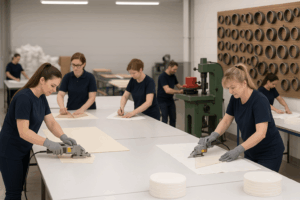
In most filter bag factories today, cutting cuffs, discs, and reinforcement layers involves:
-
Hand-marking fabric with cardboard or wooden templates
-
Scissor or die cutting using fixed jigs
-
Repetitive manual measurements with high error risk
-
Use of manual punch machines to cut round discs, one at a time
-
At least 6 full-time workers across 3–4 separate workstations
This process is time-consuming, inconsistent, injury-prone, and space-inefficient — and it directly impacts final product quality.
Why This Machine Improves Factory Competitiveness
✅ One machine replaces 6+ workers
✅ Eliminates tool storage, template errors, and die changeover
✅ Boosts productivity and dimensional accuracy
✅ Reduces floor space usage and improves workplace safety
Real-World Cutting Performance (Aramid 350 g & Fiberglass&PTFE Felt)
-
Bottom Discs (Ø135 / Ø150 / Ø165 mm, mixed): ≈ 2.0 s/pc (validated)
-
Bottom Discs (Ø120 mm, optimized path): ≈ 1.5 s/pc
-
Reinforcement Layers & Cuffs (Ø120–165 mm): ≈ 0.25–0.35 s/pc (>150 pcs/min)
-
Material Utilization in typical jobs: ≈ 82% (up to 90% with smart nesting)
Note: The machine’s maximum linear speed (up to 1800 mm/s) reflects axis capability.
The cycle times above are full, real production cycles including acceleration/deceleration, piercing, and inter-part transitions on heavy technical fabrics (aramid & fiberglass).
Filter Bag Cutting Machine — Key Features & Advantages
-
Three-in-One Cutting: Cuts cuffs, bottom discs, and reinforcement layers on one machine
-
Any Shape Cutting: Supports rectangles, circles, ovals, notches, and DXF-defined custom geometries
-
Servo-Driven Precision: High-accuracy cutting with clean edges and programmable dimensions
-
All-Material Compatible: Works with aramid, PPS, PTFE, fiberglass, blends, and other felts
-
Single-Person Operation: Fully automated feeding, cutting, and counting
-
Compact Footprint: Space-saving layout with low maintenance requirement
Your Benefits
-
Replace 5+ manual processes with 1 smart automated system
-
Save labor (1 operator vs. 6+ workers)
-
Eliminate die inventory, storage, and template variation
-
Improve dimensional accuracy and finished product consistency
-
Optimize raw material use and factory floor space
-
Lower your Total Cost of Ownership (TCO) by cutting labor, waste, tooling, and downtime
In modern filter bag production, automation isn’t just about cutting — it’s about achieving higher precision, faster throughput, and easier scalability with fewer people and less space.
Advantages Over Traditional Punch Cutting Machines
| Feature | Filter Bag Cuff and Patch Cutter | Traditional Punch Cutting Machine |
| Cutting Speed | Bottom Discs Ø120–165) —2.0 s/pc | Slow |
| Cutting Speed | Reinforcement Layers & Cuffs,(Ø120–165 mm): ≈ 0.25–0.35 s/pc (>150 pcs/min) | |
| Cutting Accuracy | 0.1mm | Variable Precision |
| Die Changes | None | Frequent |
| Labor Requirements | 1 Staff only | 6+ Staffs |
| Material Utilization | Up to 85% | Some Waste |
Technical Specifications
| Parameter | Value |
| Max Cutting Width | 2500mm |
| Min Cutting Length | 3000mm |
| Material Compatibility | Needle-punched felt, fiberglass media,15mm felt |
| Cutting Shape | Any 2D shape (rectangle, disc, oval, etc.) |
| Cutting Accuracy | ±0.1mm |
| Cutting Speed | Up to 1800mm/s |
| Cut Thickness | 25mm |
| Control System | Computer + servo system |
| Output Capacity | Up to 800–1000 cuts/hour (depending on shape) |
| Power Supply | 380V ±10% |
| Machine Dimensions | 4670 x 3607 x 1310 mm |
| Operator Requirement | 1 person |
💰 ROI Analysis – Cut Cost, Boost Output
Upgrading to our Smart Cutting System doesn’t just simplify your process — it delivers a measurable return on investment across labor, material, space, and production capacity.
🧑🏭 Labor Savings
| Category | Traditional Cutting | With Smart Cutter |
|---|---|---|
| Workers per shift | 6+ | 1 |
| Monthly cost ($3,000/worker) | $18,000 | $3,000 |
| 💡 Savings per month | $15,000 | |
| 💡 Annual savings | $180,000 |
Material Efficiency
- Manual or die-cutting material utilization: ~75%
- With our patented nesting software: Up to 90%
- ✅ 15% less waste means:
- Fewer rolls purchased
- Less scrap generated
- Higher yield on expensive materials like PTFE, PPS, fiberglass
⚙️ Productivity Uplift
- No die changes — switch between cuffs, discs, or patches in seconds
- Output: Up to 800–1000 cuts/hour, depending on shape
- Smart Cutter = One machine covers cutting for 1,200,000 filter bags/year
- Reduces rework from cutting errors and improves sewing line compatibility
🏭 Lower Total Cost of Ownership (TCO)
| Expense Category | Traditional Method | Smart Cutter |
|---|---|---|
| Die molds | Required (purchase, storage) | None |
| Floor space | Large, multi-station layout | Compact, single station |
| Downtime | High (changeovers, misalign) | Minimal |
| Training & supervision | Multiple operators | Single operator |
| 💡 Overall TCO | High | Low & Scalable |
🟠 FAQ
1. What materials can this machine cut?
This machine is compatible with all technical filtration textiles, including needle-punched felts, aramid, PPS, PTFE, polyester blends, fiberglass fabrics, and laminated or coated composite felts.
2. How many workers are required to operate the machine?
Only one operator is needed. The machine automates feeding, cutting, counting, and batching.
3. Do I need cutting dies or molds?
No. The system cuts any 2D shape (circle, rectangle, oval, custom DXF geometry) without physical dies or templates.
4. How does the smart nesting system reduce material waste?
The patent-pending nesting software automatically arranges mixed-size patterns, increasing fabric utilization to 82%–90%, significantly reducing scrap waste and material cost.
5. What is the real production speed?
Real cycle cutting speed (including acceleration and piercing):
-
Bottom discs Ø120–165 mm: 1.5–2.0 seconds per piece
-
Reinforcement layers & cuffs: 0.25–0.35 seconds per piece (>150 pcs/min)
6. Is the cutting accuracy stable across different materials?
Yes. With servo motion control, the machine provides ±0.1 mm precision, ensuring consistency across all shifts and operators.