
6-Micron Fiberglass Filter Media for High-Temperature Filtration
High-temperature woven fiberglass filter media made from fine 6-micron alkali-free E-glass filaments in both warp and weft. The fine-filament construction provides improved flexibility, uniform fabric structure and stable dimensional performance, with optional PTFE membrane lamination for enhanced dust release and low-emission filtration.
Description
Fiberglass Filter Media for High-Temperature Filtration
Woven Fiberglass Filter Cloth Made with 6-Micron E-Glass Filaments
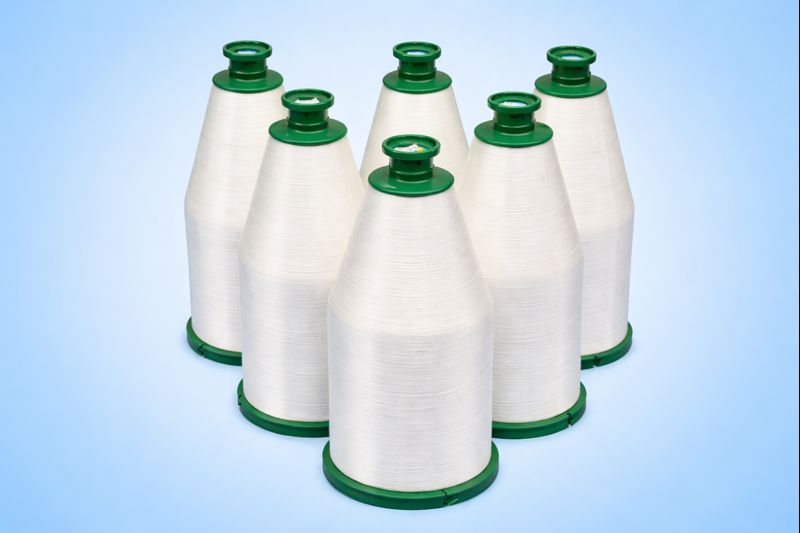
KABORY supplies high-temperature woven fiberglass filter media manufactured from alkali-free E-glass yarns with fine 6-micron filaments in both warp and weft directions.
Compared with coarser fiberglass filaments, the fine 6-micron construction provides improved flexibility, more uniform yarn formation and a consistent woven fabric structure. This helps reduce the risk of fiber damage during filter bag fabrication while supporting stable dimensional and filtration performance.
Selected fiberglass filter media constructions can be engineered for continuous operating temperatures up to approximately 260°C. PTFE coating and PTFE membrane lamination are available for applications requiring improved dust release, higher filtration efficiency and low-emission baghouse operation.
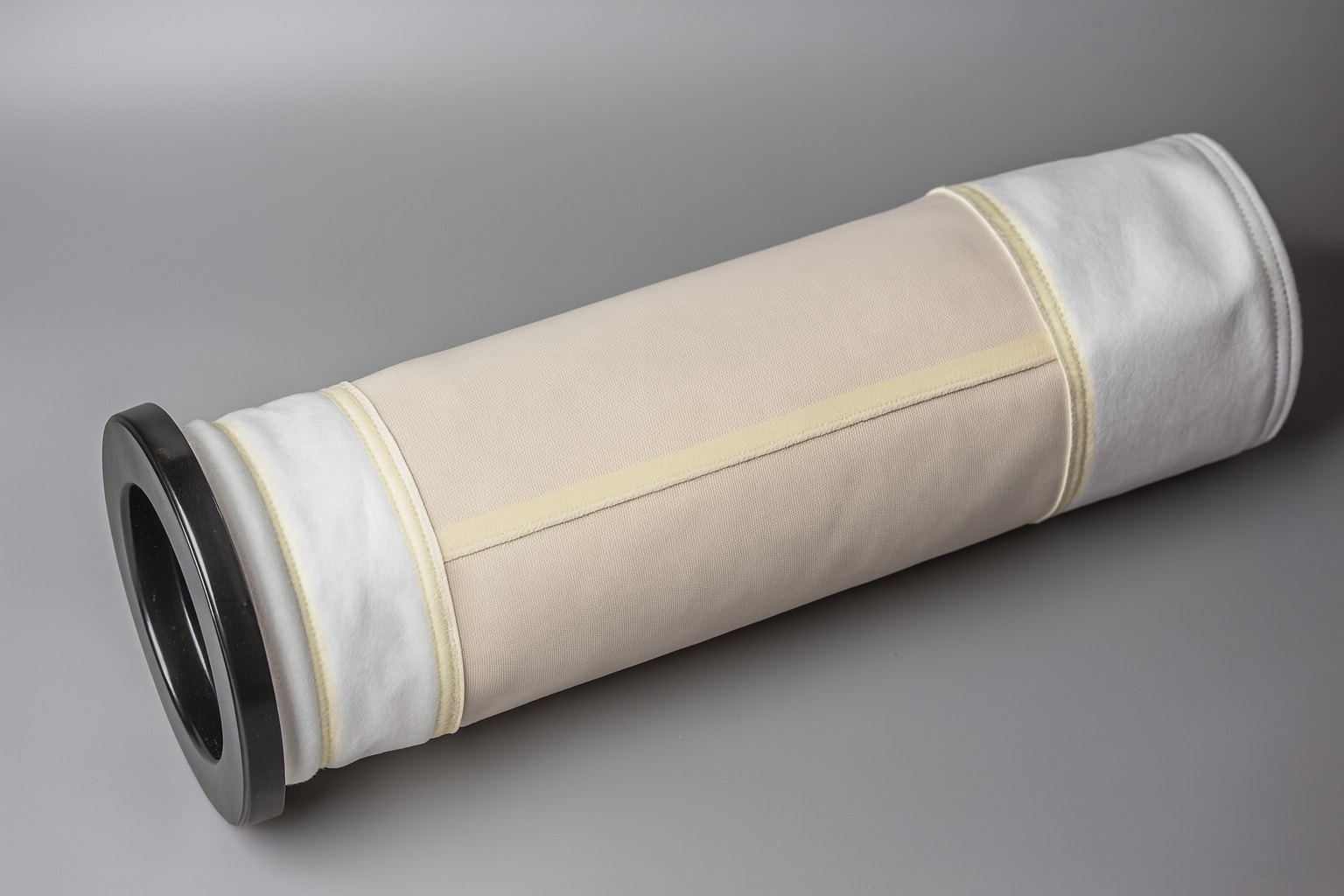
The material can be supplied in rolls or manufactured into finished fiberglass filter bags according to customer specifications.
Why 6-Micron Fiberglass Filaments Matter
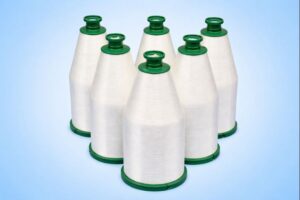
Filament diameter affects the flexibility, uniformity and handling characteristics of woven fiberglass filter media.
KABORY uses fine 6-micron E-glass filaments in both the warp and weft yarns, providing several important benefits:
- Improved flexibility compared with coarser fiberglass filaments
- More uniform yarn and woven fabric structure
- Better adaptability during cutting, sewing and filter bag fabrication
- Reduced risk of localized filament damage during controlled handling
- Consistent base fabric for PTFE coating and membrane lamination
- Stable dimensional performance at elevated temperatures
The 6-micron filament is an important structural advantage. However, final filtration performance also depends on the yarn specification, weave density, basis weight, surface treatment and actual baghouse conditions.
Key Features
High-Temperature Performance
Selected constructions can be engineered for continuous operating temperatures up to approximately 260°C.
The actual temperature limit depends on the fabric construction, surface treatment, gas composition, moisture level and operating conditions. Temperature peaks and their duration should be considered separately from the normal continuous operating temperature.
Excellent Dimensional Stability
Fiberglass has low thermal elongation and shrinkage, helping the filter media maintain stable dimensions during extended exposure to elevated temperatures.
This is especially important for long filter bags and applications where fabric deformation could affect baghouse operation.
High Tensile Strength
The woven fiberglass structure provides high tensile strength and reliable dimensional support.
Fiberglass has lower flex-fatigue resistance than many needle-punched polymer felts. Correct filter cage design, controlled cleaning pressure and careful installation are therefore important for achieving a long service life.
Resistance to Industrial Flue Gases
Fiberglass provides good resistance to many acidic and oxidizing flue-gas environments.
Suitability for alkaline, humid or highly corrosive conditions should be evaluated according to the actual gas composition, moisture content, acid dew point and selected surface treatment.
Stable Airflow and Dust Release
A properly selected weave and surface treatment can support stable airflow and controlled pressure-drop development.
PTFE coating or PTFE membrane lamination can further improve dust release and reduce dust penetration into the base fabric.
PTFE Laminated Fiberglass Filter Media
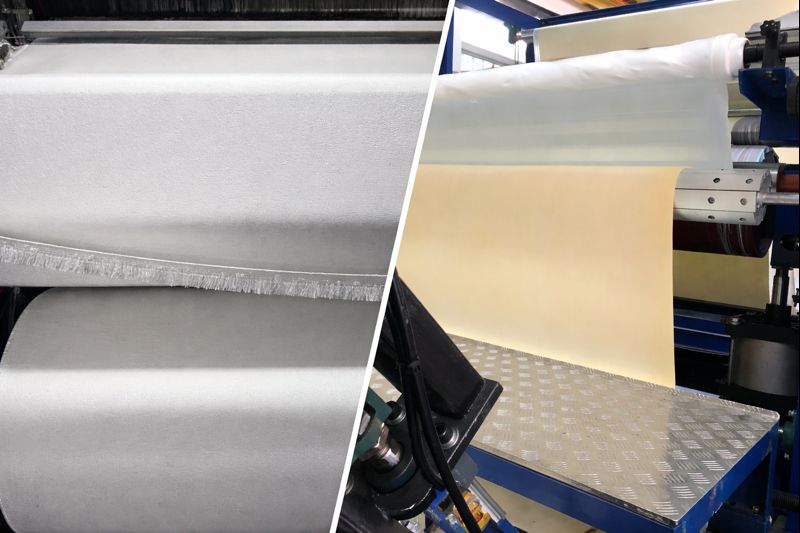
For applications involving fine dust, difficult dust release or strict emission requirements, fiberglass filter cloth can be laminated with a microporous PTFE membrane.
The PTFE membrane captures fine dust particles primarily on the surface of the filter media, providing:
- High fine-particle filtration efficiency
- Improved dust-cake release
- Reduced dust penetration into the woven fabric
- Lower risk of internal fabric blinding
- More stable pressure-drop development
- Improved cleaning performance
- Support for low-emission filtration
Actual outlet emissions depend on the complete filtration system, including the membrane, filter bag construction, seams, bag-to-tubesheet sealing, installation and baghouse operating conditions.
PTFE Coating vs. PTFE Membrane Lamination
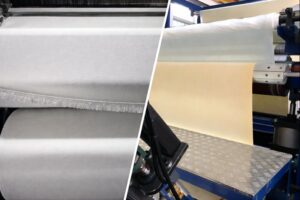
PTFE Coating or Impregnation
PTFE coating can improve:
- Surface smoothness
- Dust release
- Water repellency
- Chemical resistance
- Resistance to dust adhesion
PTFE Membrane Lamination
PTFE membrane lamination adds a microporous filtration layer to the surface of the fiberglass fabric.
It is generally selected when the application requires:
- Higher filtration efficiency
- Lower particle emissions
- Improved release of fine or sticky dust
- Reduced penetration of dust into the base fabric
- More stable long-term pressure drop
The appropriate treatment should be selected according to the dust characteristics, emission target, gas chemistry and cleaning system.
Available Finishing Options
KABORY can supply fiberglass filter media with selected finishing treatments, including:
- PTFE coating or impregnation
- PTFE membrane lamination
- Acid-resistant treatment
- Corrosion-resistant treatment
- Water- and oil-repellent treatment
- Anti-adhesion surface treatment
- Calendering and application-specific finishing
Not every treatment is required for every application. The final construction should be selected according to the actual operating conditions.
Technical Specifications
| Parameter | Specification |
|---|---|
| Base Material | Alkali-free E-glass fiberglass |
| Filament Diameter | 6 microns in both warp and weft |
| Construction | Woven fiberglass filter fabric |
| Basis Weight | Approximately 330–825 g/m² |
| Continuous Temperature | Up to approximately 260°C for selected constructions |
| Surface Treatment | PTFE coating, PTFE membrane lamination and application-specific treatments |
| Supply Form | Filter media rolls or finished filter bags |
| Customization | Basis weight, weave, width, treatment and bag dimensions |
Specifications may vary according to the selected construction and application requirements.
Typical Basis-Weight Options
| Basis Weight | General Product Positioning | Available Treatments |
|---|---|---|
| 330–450 g/m² | Lightweight and general-purpose constructions | Surface finishing, PTFE coating |
| 550–650 g/m² | Heavier constructions for demanding filtration conditions | PTFE coating or membrane lamination |
| Up to 825 g/m² | Specialized heavy woven constructions | PTFE membrane and application-specific treatments |
Basis weight alone does not determine filtration efficiency or application suitability. Filament diameter, weave construction, surface treatment, gas chemistry, dust characteristics and cleaning conditions must be evaluated together.
Typical Applications
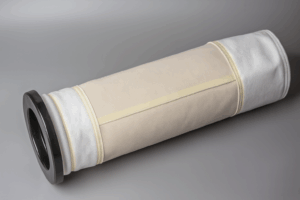
Fiberglass and PTFE membrane laminated fiberglass filter media can be engineered for:
- Cement kilns and clinker coolers
- Cement raw mills
- Steel plants and metallurgical furnaces
- Carbon black production
- Industrial and biomass boilers
- Waste-incineration systems
- Chemical-process exhaust systems
- Other high-temperature industrial dust collectors
The appropriate construction and treatment must be confirmed according to the complete operating conditions of each application.
Important Operating Considerations
To achieve reliable service life, the following conditions should be considered:
- Excessive pulse-jet cleaning pressure should be avoided
- Filter cages should be smooth, correctly aligned and free from sharp edges
- Operation below the acid dew point should be minimized
- Condensation during start-up and shutdown should be controlled
- Filter bags should be handled carefully during transportation and installation
- Protective installation sleeves should be used where appropriate
Fiberglass filter media should be selected according to the complete application rather than temperature alone.
Information Required for Media Selection
For an accurate recommendation, please provide:
- Normal and maximum operating temperature
- Gas composition and moisture content
- Dust type and particle size
- Required outlet emission level
- Cleaning method and pulse pressure
- Filter bag diameter and length
- Existing filter media and service life
- Current baghouse operating problems
This information allows the fabric construction, basis weight and surface treatment to be selected more accurately.
Quality Control
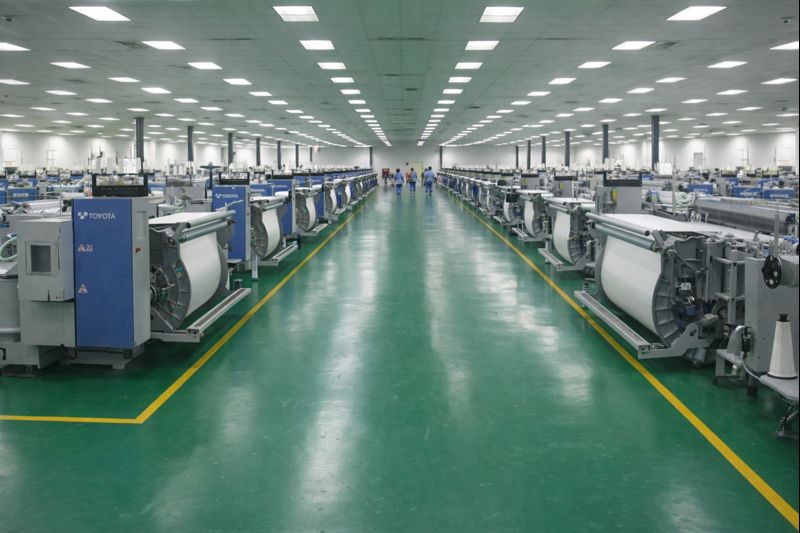
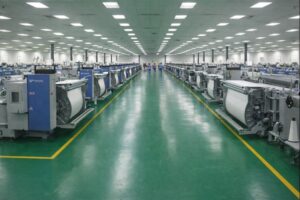
KABORY controls production from yarn selection through weaving, finishing and final inspection.
Quality-control procedures include:
- Raw-material and yarn inspection
- Warping and weaving-density control
- Basis-weight and dimensional verification
- Surface-treatment inspection
- PTFE membrane-lamination inspection
- Air-permeability and tensile-strength testing
- Finished-roll visual inspection
The use of consistent 6-micron filaments in both warp and weft helps create a uniform base material for reliable batch-to-batch production.
Filter Media Rolls and Finished Filter Bags
KABORY supplies fiberglass filter media in rolls for customers manufacturing their own filter bags.
Available customization includes:
- Fabric width and roll length
- Basis weight and weave construction
- PTFE coating
- PTFE membrane lamination
- Chemical and surface treatments
We can also manufacture finished fiberglass filter bags with customized dimensions and constructions, including:
- Snap-band top
- Ring or cuff top
- Flange top
- Reinforced bottom
- Wear-protection sections
- Application-specific seam designs
Why Choose KABORY?
KABORY combines filtration-material supply with practical filter bag manufacturing experience.
We provide:
- Fine 6-micron E-glass filaments in both warp and weft
- Consistent woven fiberglass filter fabric
- Multiple basis-weight options
- PTFE coating and membrane lamination
- Customized filter media rolls
- Finished fiberglass filter bags
- Application-based media selection
- Reliable quality control
High-Temperature Filtration Solutions
KABORY fiberglass filter media combines fine 6-micron E-glass filaments, high-temperature stability and a uniform woven structure for demanding industrial dust-filtration applications.
For applications requiring enhanced dust release, fine-particle filtration or low-emission performance, PTFE membrane laminated fiberglass filter media provides an advanced surface-filtration solution.
Contact KABORY with your operating data, required dimensions and filtration targets to receive a suitable fiberglass filter media or finished filter bag recommendation.