
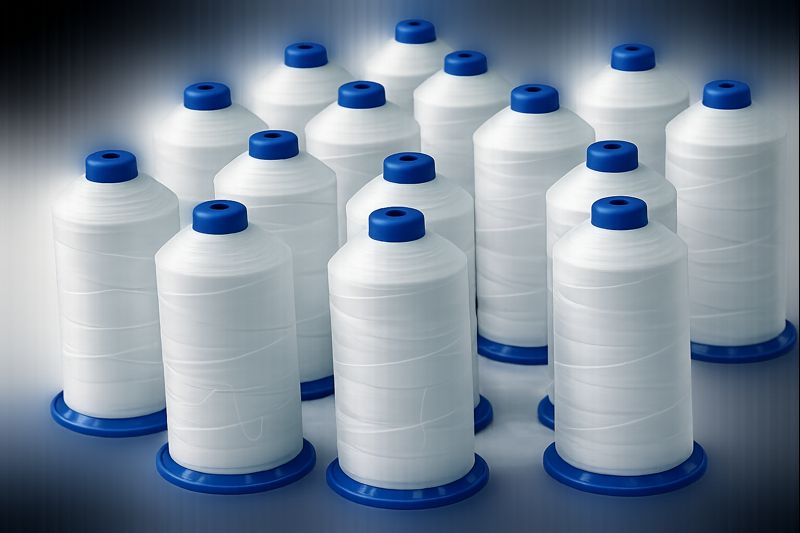
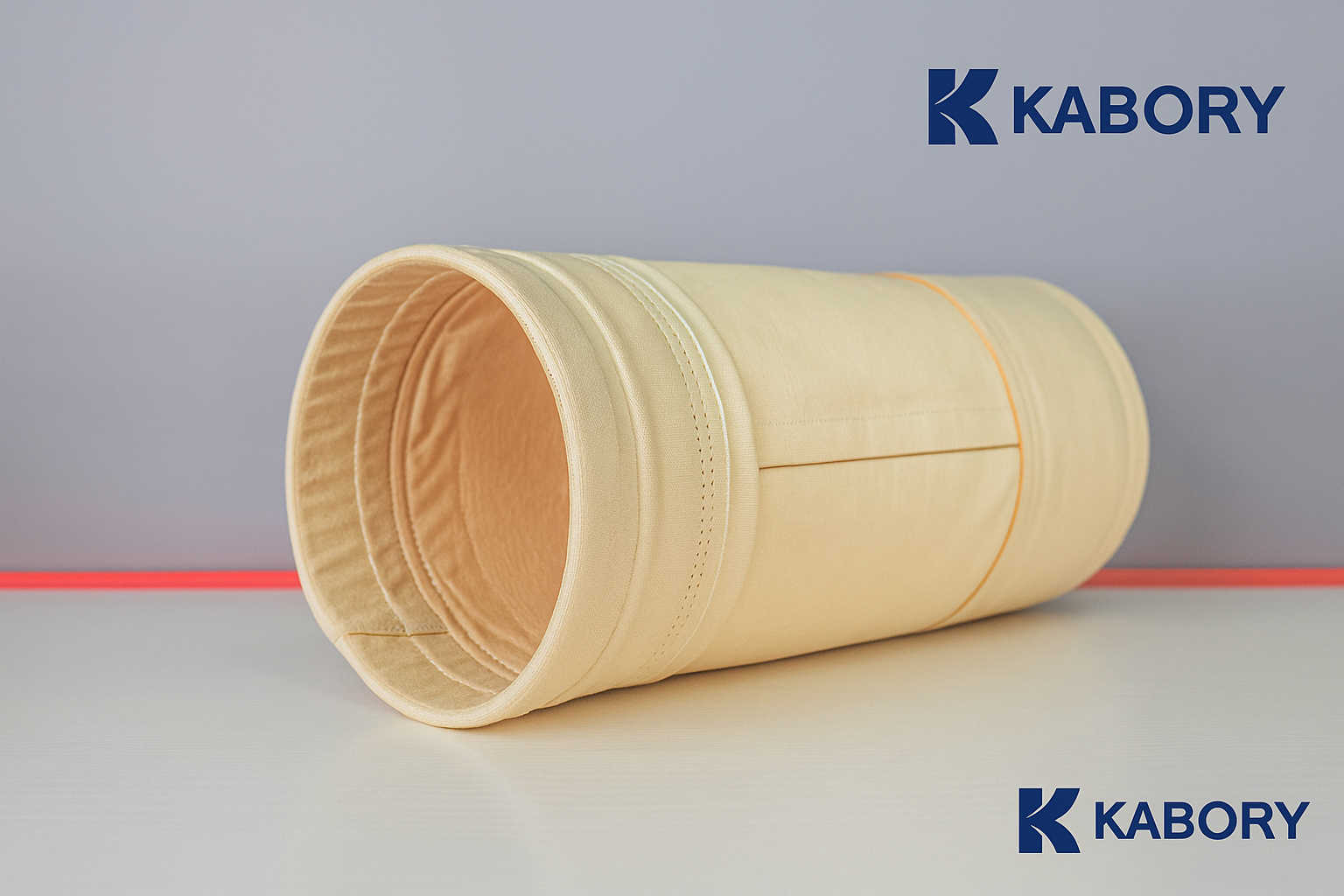
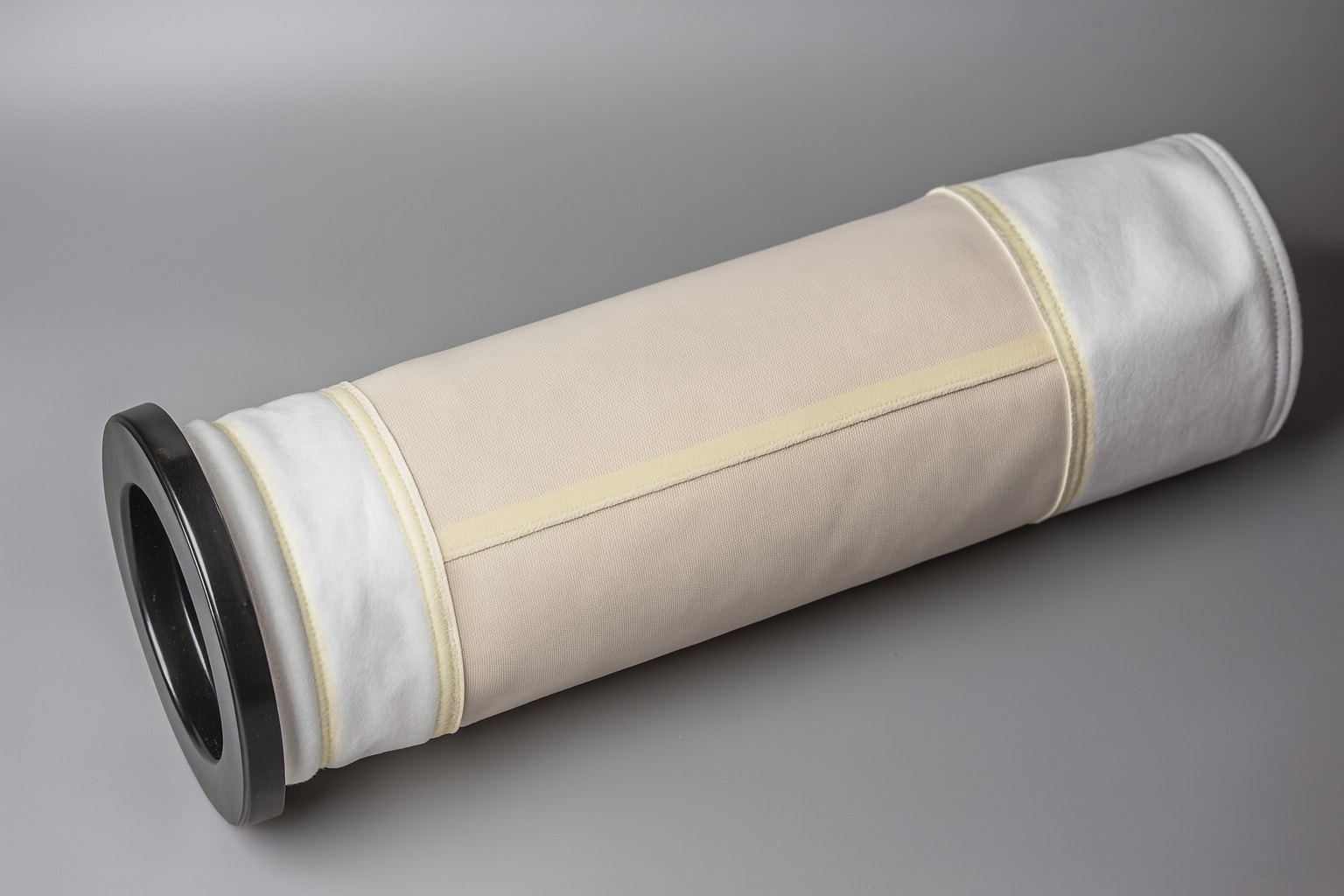
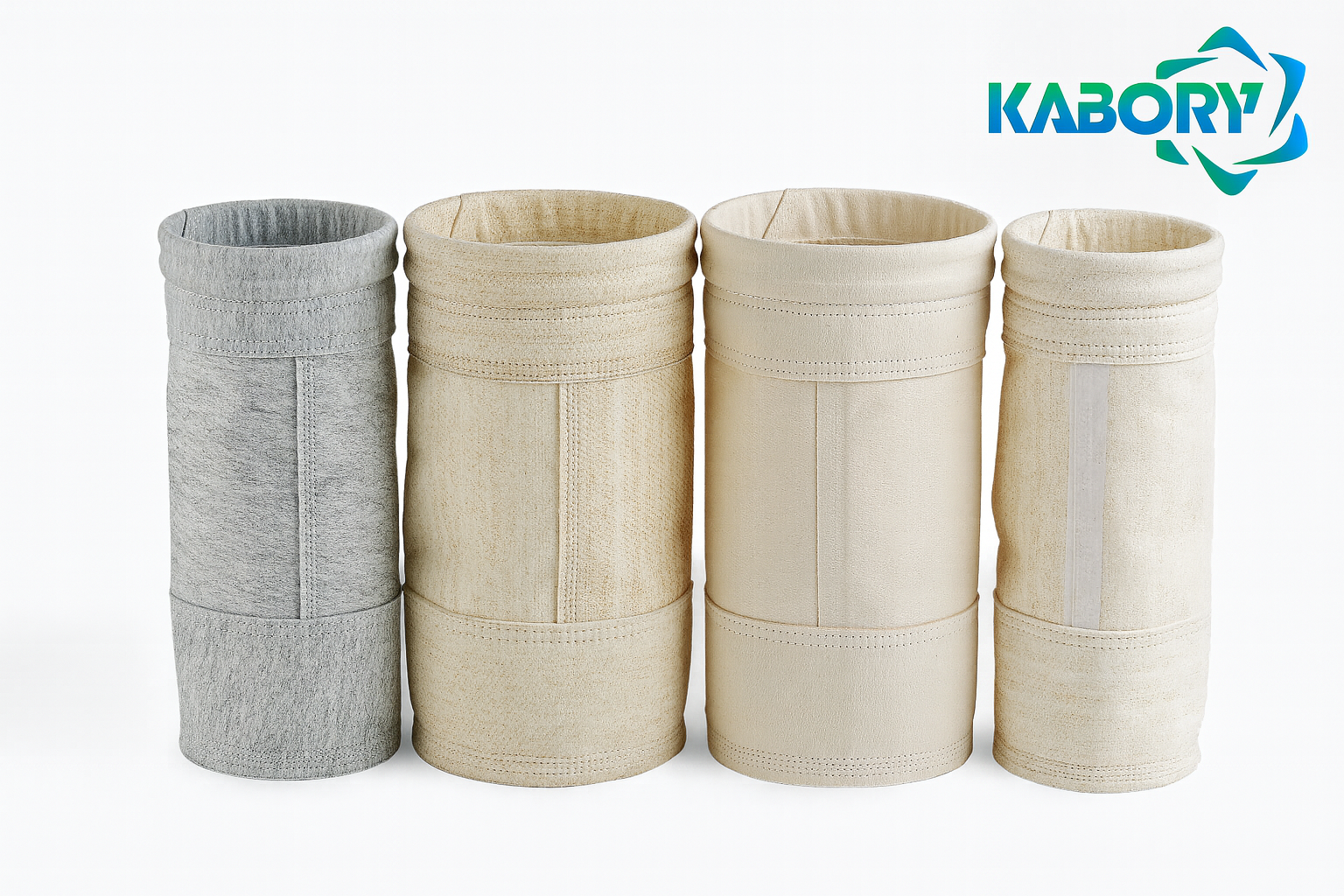
PTFE Sewing Thread for Filter Bag Production
PTFE sewing thread is the industry-standard choice for filter bag production, especially for high-temperature and pulse-jet applications.
Kabory supplies membrane-split PTFE sewing thread, offering superior seam stability, excellent heat and chemical resistance, and reliable performance in automatic and high-speed filter bag sewing processes.
Description
PTFE Sewing Thread for Filter Bags – Engineering Standard for High-Load Filtration
In industrial filtration applications, PTFE sewing thread plays a critical role in determining the long-term reliability of filter bag seams under high temperature, chemical exposure, and continuous pulse-jet cleaning.
PTFE sewing thread for filter bags is a high-performance industrial sewing thread manufactured from 100% high-molecular-weight polytetrafluoroethylene (PTFE) polymer, specifically engineered to provide high tensile strength, low shrinkage, and long-term mechanical stability in demanding operating environments.
By using pure, high-molecular PTFE polymer without fillers or recycled content, the sewing thread maintains stable mechanical properties, minimal thermal shrinkage, excellent chemical inertness, and non-aging behavior throughout prolonged service life. This ensures consistent seam integrity under thermal cycling, vibration, and repeated pulse-jet stress—conditions where conventional organic or low-grade PTFE threads often fail prematurely.
Within this field, membrane-split (split-film) PTFE sewing thread is not a new or experimental concept. Instead, it represents the most mature, reliable, and application-proven manufacturing method currently used for high-load industrial filtration.
Its micro-fibrillated network structure provides superior flexibility, controlled surface friction, and efficient stress distribution during sewing and operation—key factors for maintaining seam stability under real-world filtration conditions.
As a result, PTFE sewing thread—particularly membrane-split PTFE thread—has become the industry-standard sewing solution for filter bags used in cement production, steelmaking, power generation, and waste incineration systems, where long-term operational reliability is non-negotiable.
Technical Parameters of PTFE Sewing Thread (Split-Film Process)
| Parameter | Unit | PTFE/F-1400Dtex (1400/3s) | PTFE/F-1700Dtex (1700/3s) |
| Manufacturing Process | – | Film-splitting | Film-splitting |
| Linear Density | Dtex | 1400 | 1700 |
| Tensile Strength | N | 54.76 | 62 |
| Breaking Elongation | % | 7.4 | 5.7 |
| Breaking Tenacity | cN/Dtex | 4.1 | 3.7 |
| Heat Shrinkage | % | 1.5 | 1.3 |
| Maximum Operating Temperature | °C | 260 | 260 |
| Spool Length | m | ~8000 | ~8000 |
| Test Temperature | °C | 20–25 | 20-25 |
How to Choose 1400Dtex vs 1700Dtex PTFE Sewing Thread
Choosing 1400 Dtex vs 1700 Dtex PTFE Sewing Thread
✔ Choose 1400 Dtex when:
-
Sewing meta-aramid, PPS, or PTFE filter bags
-
Using automatic or high-speed sewing machines
-
Prioritizing smooth thread feeding and sewing stability
-
Producing standard cement, steel, or general dust-collection filter bags
Design rationale:
1400 Dtex offers a balanced combination of tensile strength and flexibility, making it suitable for the majority of high-temperature filter bag applications.
✔ Choose 1700 Dtex when:
-
Sewing fiberglass filter bags
-
Manufacturing large-diameter or reverse-air filter bags
-
Operating under strong pulse-jet cleaning and higher seam loads
-
Requiring maximum seam dimensional stability
Design rationale:
1700 Dtex provides lower elongation and improved dimensional stability, making it better suited for heavy-duty filtration applications with higher mechanical stress.
🧩 Engineering Reminder
Higher linear density does not simply mean “stronger” — it means different elongation behavior and seam response under load.
Selection should be based on sewing conditions and filter bag design, not strength alone.
Why is PTFE sewing thread preferred for filter bag production?
A:
PTFE sewing thread is preferred in filter bag production because it offers a unique combination of thermal stability, chemical inertness, and long-term mechanical reliability, which directly determines seam performance under harsh filtration conditions.
In industrial dust collection systems, the sewing seam is often the first point of failure. PTFE sewing thread addresses this risk at its root.
Q1: How does PTFE sewing thread perform under high operating temperatures?
A:
PTFE sewing thread maintains stable mechanical performance under continuous operating temperatures of 240–260 °C, without melting, embrittlement, or significant loss of tensile strength.
Unlike organic fibers, PTFE does not soften or degrade under sustained heat exposure, making it suitable for long-term high-temperature filtration applications.
Q2: Why is chemical resistance critical for filter bag sewing seams?
A:
Filter bags are often exposed to aggressive flue gas components, including acids, alkalis, and corrosive by-products.
PTFE sewing thread is chemically inert and resistant to most industrial chemicals, ensuring that seam integrity is preserved even in complex or corrosive operating environments where other fibers may degrade.
Q3: How does PTFE sewing thread handle pulse-jet cleaning stress?
A:
During pulse-jet cleaning, filter bag seams are subjected to repeated mechanical shock, vibration, and flexing.
PTFE sewing thread demonstrates excellent fatigue resistance, allowing the seam to withstand continuous pulse-jet cycles without cracking or premature breakage—an essential requirement for maintaining filtration efficiency over long service intervals.
Q4: Why does PTFE sewing thread provide better long-term seam reliability than organic fibers?
A:
Organic sewing threads may age, oxidize, or hydrolyze over time, leading to gradual strength loss and seam failure.
PTFE, by contrast, retains its molecular structure and mechanical performance throughout the full operating life of the filter bag, providing consistent, predictable seam reliability rather than short-term performance.
Q5: Are all PTFE sewing threads manufactured the same way?
A:
No. While all PTFE sewing threads share the same base material, their performance is largely determined by the manufacturing process, not by the PTFE name alone.
For high-performance filter bag applications, membrane-split (split-film) PTFE sewing thread offers clear structural and operational advantages over conventional extruded PTFE threads.
Q6: What is membrane-split (split-film) PTFE sewing thread?
A:
Membrane-split PTFE sewing thread is produced by stretching a PTFE membrane and mechanically splitting it into fine, fibrillated micro-structures, rather than twisting rigid, solid extruded filaments.
This process creates a micro-fibrillated, network-like structure that combines flexibility, tensile efficiency, and controlled surface friction—properties that are critical for stable, high-speed filter bag sewing.
Q7: Why does sewing thread failure directly lead to filter bag failure?
A:
In high-temperature and pulse-jet filtration systems, the sewing seam is the weakest structural point of a filter bag.
When sewing thread cracks or breaks:
-
Stitch lines open immediately
-
Dust leakage begins at the seam
-
The filter bag fails regardless of fabric quality
In real operating conditions, filter bag failure is most often triggered by sewing thread failure, which is why the manufacturing method of PTFE sewing thread matters more than the material name itself.
Filter bag failures often start at the seam — not the fabric.
Choosing the correct PTFE sewing thread manufacturing method can significantly reduce
seam cracking, stitch breakage, and premature bag failure.
Talk to us before finalizing your PTFE sewing thread selection.
👉 Read Technical Analysis →
Manufacturing Process Standard — Internationally Aligned Membrane-Split Technology
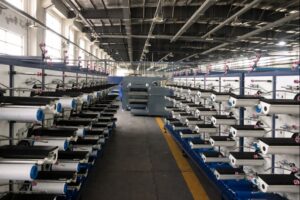
All PTFE sewing threads supplied by Kabory Filters are manufactured using an internationally aligned membrane-split PTFE production process, consistent with the mainstream manufacturing routes adopted by leading global PTFE thread producers.
This production route is based on PTFE membrane stretching and controlled splitting, rather than extrusion-based filament forming.
The result is a uniform, flexible, and stable thread structure specifically designed for high-temperature, high-speed industrial sewing.
Why the Manufacturing Process Matters
The performance of PTFE sewing thread is determined not only by raw material, but fundamentally by the manufacturing process.
Compared with extruded PTFE threads, membrane-split PTFE sewing thread offers:
-
More consistent thread diameter and structure
-
Improved flexibility and bending fatigue resistance
-
Stable surface characteristics for predictable tension control
-
Reliable performance in automatic and high-speed sewing machines
These characteristics are essential for continuous industrial filter bag production, where sewing stability directly affects productivity and seam quality.
Split-Film vs Extruded PTFE Thread – Technical Comparison
| Item | Extruded PTFE Sewing Thread | Split-Film PTFE Sewing Thread |
| Manufacturing process | Direct extrusion into filament | PTFE membrane stretching → splitting → fibrillation |
| Process complexity | Low | Moderate |
| Production cost | Low | Medium |
| Fiber structure | Solid or semi-solid filament | Micro-fibrillated network structure |
| Diameter uniformity | Poor, noticeable variation | Highly uniform |
| Flexibility | High rigidity, limited bending adaptability | Excellent flexibility, adapts well to stitch formation |
| Surface friction behavior | Relatively high and unstable | Controlled and stable surface friction |
| Tensile strength utilization | Low | High |
| Breaking strength (1400 dtex) | ≤ 35 N (typical maximum) | ≈ 50 N (average), with higher peak values |
| High-speed sewing suitability | Limited; prone to skipped stitches or breakage | Suitable for stable high-speed sewing |
| Pulse-jet fatigue resistance | Prone to fatigue cracking and breakage | Excellent resistance to pulse-jet fatigue |
| Typical failure mode | Thread fatigue and premature breakage | Long-term stable performance, low failure rate |
| Suitability for industrial filter bags | Basic / transitional solution | Preferred solution for high-performance filter bags |
Common Sewing Issues with PTFE Sewing Thread
| Sewing Issue | Engineering Cause (Root Mechanism) | Engineering Solution with Membrane-Split PTFE Sewing Thread |
| Thread breakage (fatigue failure) | Rigid extruded PTFE filaments experience stress concentration under repeated bending and tensile loading, especially during high-speed sewing and pulse-jet cleaning | The micro-fibrillated network structure distributes mechanical stress more evenly, significantly improving fatigue resistance and reducing long-term thread breakage |
| Thread jamming / poor thread feeding | High stiffness or inconsistent thread diameter causes unstable tension during automatic or high-speed sewing | Improved flexibility and structural uniformity enable smooth thread feeding and stable tension control |
| Skipped stitches | Insufficient frictional engagement between smooth filament thread and filter media, leading to unstable stitch formation | The fibrillated surface structure increases frictional engagement with filter media, improving stitch formation and consistency |
| Seam slippage or loosening | Inadequate stitch locking under vibration and pulse-jet loading results in gradual seam movement | Enhanced surface structure and flexibility improve stitch locking, reducing seam slippage over long-term operation |
| Unstable performance at high sewing speed | Rigid filaments make tension control difficult at high speed, increasing breakage and skipped stitch risk | Membrane-split PTFE sewing thread provides more predictable tension behavior, lower breakage rates, and stable performance in automated, high-speed sewing |
Why Split-Film PTFE Thread Delivers Higher Effective Strength at the Same Linear Density
One critical but often overlooked difference between split-film (membrane-split) and extruded PTFE sewing thread lies in fiber distribution at the same linear density (Dtex).
In extrusion-based PTFE threads, the filament diameter is often less uniform, resulting in thicker sections and fewer effective load-bearing filaments along the thread length.
By contrast, membrane-split PTFE sewing thread is produced by stretching and splitting a PTFE membrane into a large number of fine, uniformly distributed micro-fibrils.
As a result, at the same linear density (same weight per length):
-
Split-film PTFE thread contains a higher total number of finer filaments
-
Load is distributed across more individual fibrils
-
Stress concentration is reduced during bending and pulse-jet loading
This structural difference explains why membrane-split PTFE sewing thread consistently demonstrates higher effective tensile performance, better fatigue resistance, and more stable sewing behavior, even when nominal Dtex values are the same.
Compatibility with Automatic Filter Bag Sewing Machines
Membrane-split PTFE sewing thread is widely used in automated filter bag production lines due to its stable and predictable sewing behavior:
-
Consistent tension during continuous operation
-
Low breakage rate at high sewing speeds
-
Uniform stitch formation along long seams
-
Reliable performance in continuous, multi-shift production
These characteristics make it a preferred choice for modern filter bag factories focused on productivity and repeatable quality.
Other Sewing Thread Options for Filter Bag Production
While PTFE sewing thread—particularly membrane-split PTFE—is the primary and recommended solution for high-temperature applications, other sewing thread materials are used in specific operating conditions.
Sewing Thread Material Comparison
| Sewing Thread Material | Typical Continuous Temperature | Key Characteristics | Typical Applications |
| PTFE (Membrane-Split) | up to 240–260 °C | Excellent heat resistance, chemical inertness, superior fatigue resistance, stable stitches | High-temperature, pulse-jet cleaned filter bags |
| Meta-Aramid | up to 200–220 °C | High strength, good thermal stability, cost-effective | Medium-to-high temperature filter bags |
| PPS | up to 190 °C | Good resistance to moisture and specific chemicals | Selected chemical environments |
| Polyester | up to 130–150 °C | High strength, economical | Low-temperature filter bags |
Note: For continuous high-temperature and pulse-jet applications, membrane-split PTFE sewing thread remains the most reliable and widely adopted solution.
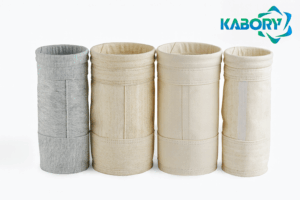
Sewing Thread Selection Guidance
-
High-temperature or pulse-jet filter bags (≥200 °C):
Membrane-split PTFE sewing thread -
Medium-temperature applications with cost considerations:
Meta-aramid sewing thread -
Lower temperature or specific chemical conditions:
PPS or polyester sewing thread -
Thread TypeTemperature ResistanceBreaking StrengthKey Features
High-Tenacity Polyester ≤150°C ≥60N ±5% Strong, abrasion-resistant High-Tenacity Polyethylene ≤100°C ≥55N ±5% Lightweight, chemical-resistant Split-Film PTFE ≤260°C ≥68N ±5% Heat & chemical resistant, smooth sewing Acrylic Thread ≤150°C ≥25N ±5% Chemically stable, good heat resistance PPS Thread ≤190°C ≥25N ±5% Hydrolysis- and oxidation-resistant Meta-Aramid Thread ≤200°C ≥25N ±5% High strength and thermal stability Fiberglass Thread ≤280°C ≥25N ±5% Excellent high-temp performance
Correct sewing thread selection plays a critical role in seam durability and overall filter bag service life.
Summary
PTFE sewing thread has become the industry standard and most widely used solution in modern filter bag production due to its exceptional resistance to heat, chemicals, and mechanical fatigue.
By adopting membrane-split PTFE sewing thread as the core solution—while offering alternative materials for defined operating conditions—TW Filters provides sewing thread solutions based on real industrial experience and long-term performance requirements.
Long-Term Commitment to Filter Bag Sewing Quality
We supply high-quality sewing threads that fully meet the sewing requirements of filter bag production and perform reliably under a wide range of operating conditions. This capability is built on our deep understanding of both filter bag manufacturing processes and real-world filtration environments.
Having been continuously engaged in the filter bag industry for over 20 years, we understand that long-term seam reliability depends not only on material selection, but also on how filter bags are produced, operated, and maintained in actual industrial service. Based on this experience, we will continue to focus on the long-term supply and development of high-quality sewing threads for demanding filter bag applications.
Experiencing Sewing Stability Issues with PTFE Thread?
⚠️ If your current PTFE sewing thread feels too stiff, shows inconsistent diameter, or causes skipped stitches, frequent thread breakage, or limited sewing speed, it may be restricting the performance of your filter bag sewing operation.
🔍 We can help you verify this under real production conditions.
Please contact us to request comparison samples, allowing you to evaluate sewing stability, achievable speed, and seam quality on your own machines.